
Mongolia’s Winter Horse Festival: What It Is and Why It’s Unmissable
Held every November in Khentii Province, Mongolia’s Winter Horse Festival is a rare, mostly local celebration of horse culture on snow-covered steppe.
Table of Contents
I attended this festival last year in Chinggis and was completely blown away. It felt like a festival genuinely for locals, not a performance staged for outsiders, and there were barely any other tourists there at all. That’s increasingly rare to find anywhere in Mongolia, and it’s part of what makes this one worth knowing about.
The Winter Horse Festival is held annually in November in Khentii Province, the birthplace of Chinggis Khaan and, in a real sense, the beating heart of Mongolia’s horse culture. By the time the festival happens, snow is already on the ground and temperatures have turned properly cold, though not unbearably so. That combination, snow-covered steppe, clear cold air, and a festival built entirely around horses, makes for one of the most surreal, beautiful settings I’ve experienced in the country.
Everything you Need to Book for When You Land in Ulaanbaatar
Everything you need to book when you arrive in Ulaanbaatar.
🚕 Airport Transfer into the Ulaanbaatar City Center
Book your airport transfer before you land. Ulaanbaatar taxis are chaotic and this is worth the peace of mind.
🛌 Where to Stay
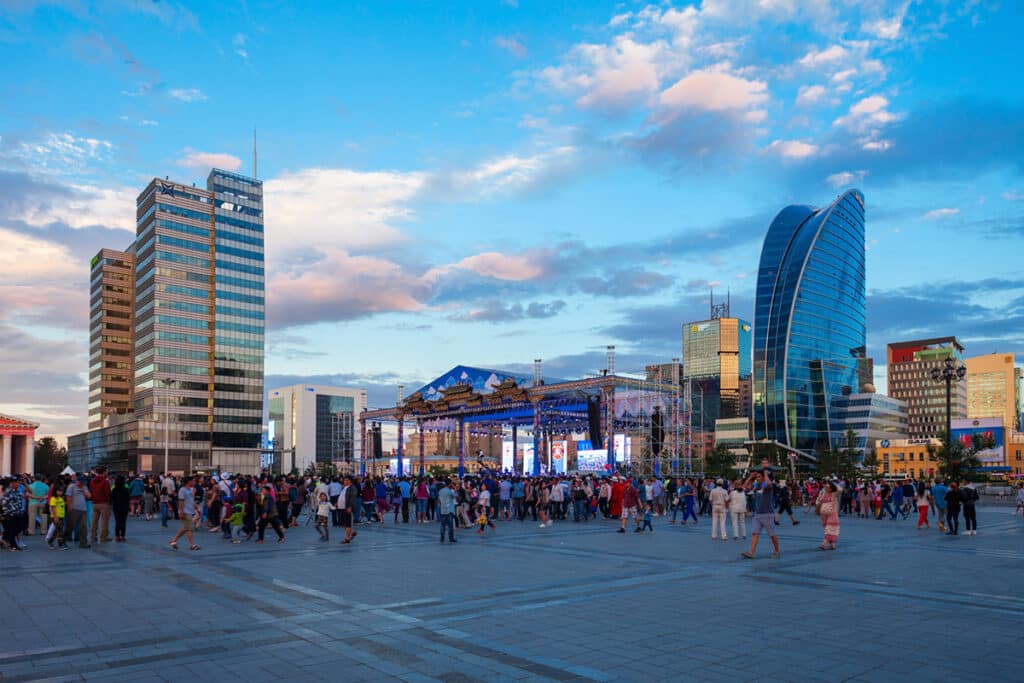
My picks at every budget, all within walking distance of Sukhbaatar Square:
→ Hostel One: best hostel in the city for solo travelers
→ Urgoo Hotel: locally owned boutique spot, great value and location
→ H9 Hotel Nine: steps from everything and great value (highly recommend!)
→ Best Western Premier Tuushin: 4-star hotel next to the square for a more comfortable stay and notable service (plus, a safe place to store luggage while you’re in the countryside)
👉 Make the Most of Your Time in the Capital
If you have extra days, these are the experiences I’d actually recommend:
→ Ulaanbaatar: Private Guided City Tour with Car
→ Cooking Class in a Local Home
→ Mongolian Traditional Dance & Music Concert Ticket
→ Chinggis Khaan Equestrian Statue & Terelj National Park
→ Ulaanbaatar: Private Nomad Horseback Ride + Homemade Lunch
A Festival Built Around the Horse
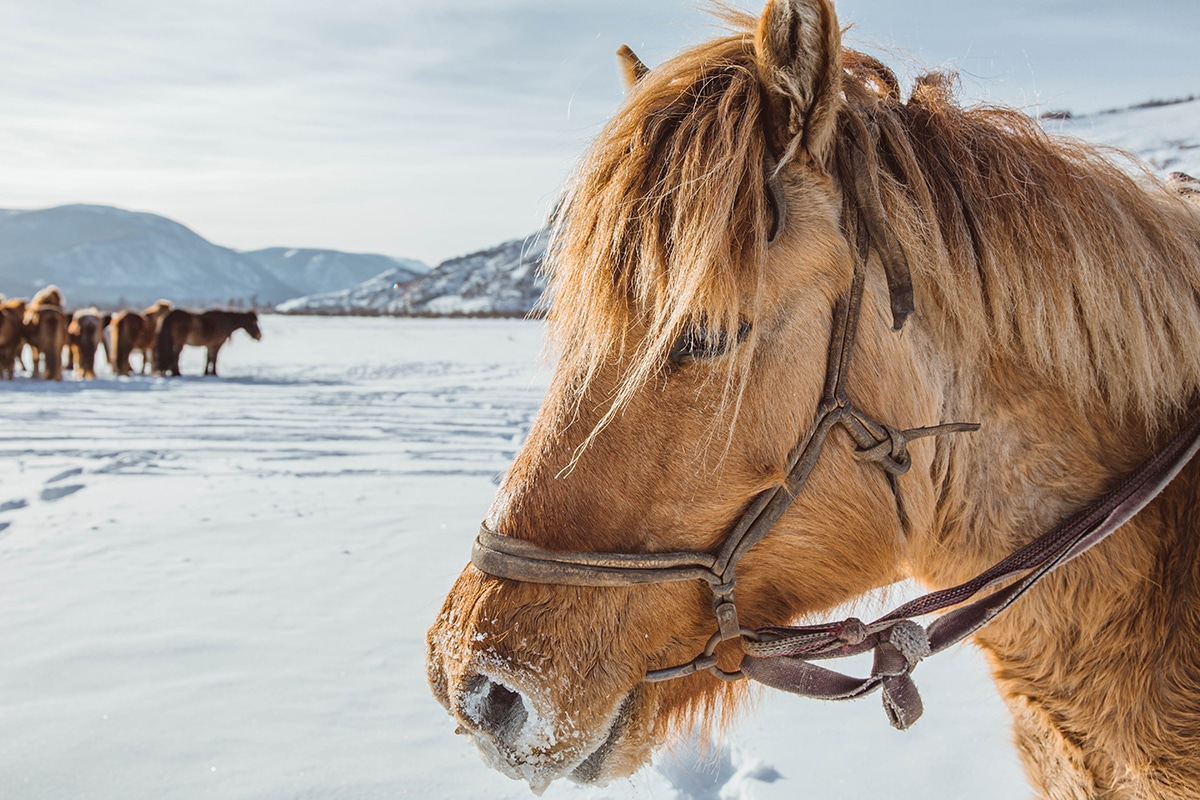
If Naadam is Mongolia’s most famous summer festival, this is its winter counterpart, and the horse is unmistakably the center of attention here. Locals arrive on horseback from surrounding areas, and the festival grounds fill with riders rather than vehicles. Watching that many horses and riders move across snow, with the Khentii mountains in the background, says more about Mongolia’s relationship with the horse than almost anything else I’ve witnessed.
The festival includes a grand opening ceremony with traditional rider processions, wild horse taming competitions, wrestling tournaments, and horse racing across the winter steppe. There’s also cultural programming woven throughout, performances, community dancing with local residents in the evenings, and museum visits nearby that connect the region’s history to what you’re watching unfold in front of you. It’s a full sensory experience: the sound of hooves on packed snow, the cold air, the noise of a crowd that’s genuinely invested in the outcome of every competition.
Why November
Winter isn’t an incidental detail here, it’s central to what the festival represents. Horses carry deep symbolic weight in Mongolian culture year round, but there’s something particular about honoring that relationship in the hardest season, when survival itself depends more visibly on the animals that make life on the steppe possible. Competing and celebrating against that backdrop, rather than in the ease of summer, gives the whole event a different weight.
Practically speaking, November also means the crowd stays almost entirely local. Winter travel to Mongolia deters most tourists, which is exactly why this festival has kept the character it has. If you want to see how Mongolians themselves celebrate their own horse culture, without a tourist industry built up around it, this is one of the clearest windows into that.

Being Gifted a Horse
One of the most meaningful things that happened to me during my time in Khentii wasn’t part of the festival program at all. A local herder gifted me a horse, and it’s still one of the most significant gestures I’ve experienced in Mongolia.
Here’s part of what I wrote about it at the time:
This gesture carries deep, significant meaning. Here’s why.
Horses represent peace and pride, they are the most respected animal in Mongolian culture. As we go into the year of the fire horse (2026), the year ahead marks a time of great potential but also unpredictable energy.
This symbolic gift and gesture means the herder will continue to care for the horse and keep it with his herd. I am always welcome to visit, and eventually ride this horse when I visit. But it will remain semi-wild and free.
This horse will be my spiritual protector, and we are now connected. In a way, he will protect me from harm. Horses are thought to bridge the gap between the spiritual and physical world, acting as spiritual messengers.
They say a Mongol without a horse is like a bird without wings. Well, I guess I finally got my wings.
Being given a horse as a foreigner is one of the highest forms of respect a local can extend. It’s not a transaction and it’s not for show, it’s an invitation into a relationship that Mongolians take seriously on a spiritual level, not just a practical one. Moments like that don’t happen at festivals built for tourists. They happen at ones like this.

What to Expect If You Go
This is a cold-weather event, and dressing for it matters more than almost anything else you’ll plan around. Days can be clear and bright, but temperatures drop fast once the sun goes down, and you’ll likely be outside for long stretches watching competitions unfold. Warm, windproof layers, good boots, and gloves you can actually move your hands in are all worth prioritizing.
Beyond that, come with patience and an open schedule. This isn’t a festival run on a tight, tourist-friendly timetable, it moves at its own pace, shaped by the competitions and the community around them, not by a printed itinerary.
Author: Breanna Wilson
Hi! Sain uu! I’m Breanna, an American travel writer and adventurer living in Ulaanbaatar, Mongolia for more than 9 years. I’ve written for and been featured in Condé Nast Traveler, CNN, Forbes, and the New York Times, among others. Read more of my Mongolia travel articles here.


Join our Private MIM Community on Facebook
Proudly Based in Ulaanbaatar, Mongolia
© 2026 Meanwhile in Mongolia