It’s often hard to understand which region to visit in Mongolia, and when. It’s even harder to decide what to do, and how to plan the best itinerary, when you do finally go! Below find detailed information on the central region (Arkhangai, Bayankhongor, Ovorkhangai, and Tov), as well as day-to-day itineraries and other important things to know.
Central Mongolia is the heart of the country in every sense, and arguably the easiest region to fall in love with.
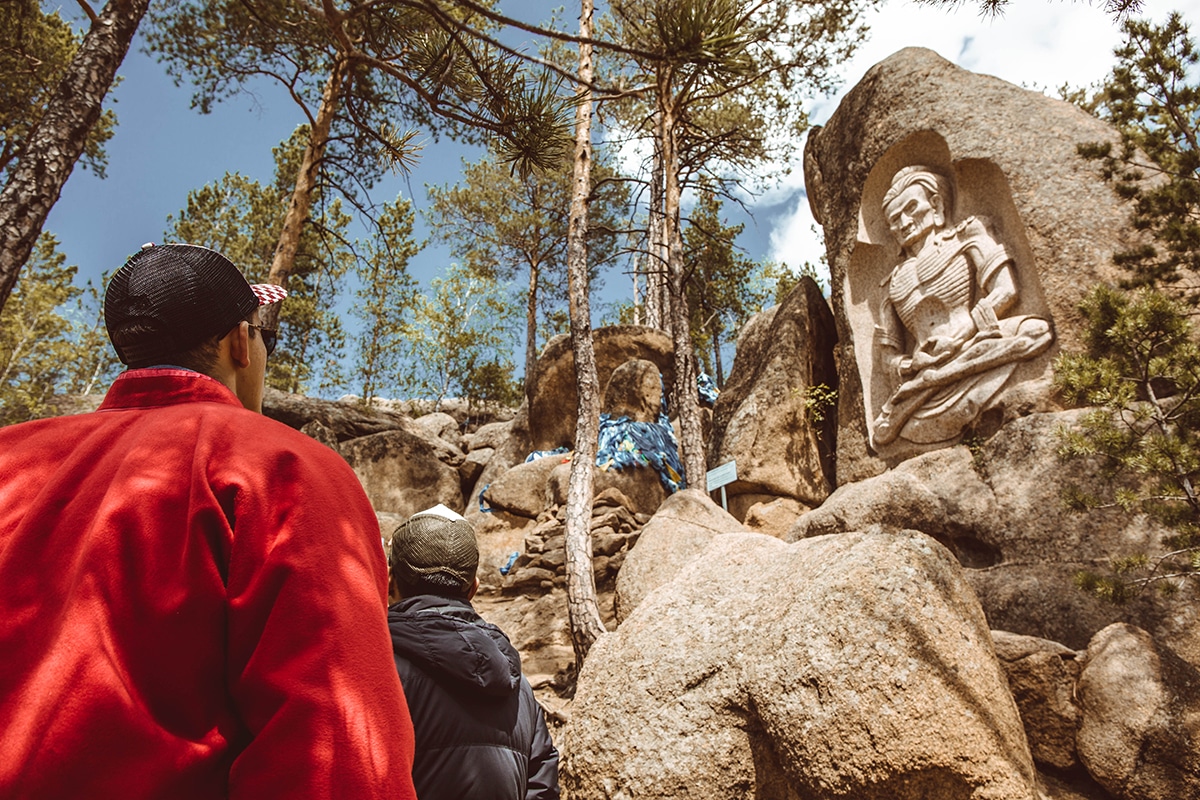
Rolling green steppe, the ancient capital of Kharkhorin, and the monasteries and wild horses of the Orkhon Valley make it the richest region for history and culture in Mongolia.
Add in accessible ger camps, welcoming herder families, and landscapes that shift from river valleys to volcanic craters, and it’s easy to see why the central loop is a classic first taste of the Mongolian countryside.
Central Mongolia sees long, cold, and dry winters, though conditions are somewhat gentler than in the far west. The coldest month is January, with average highs around 7°F (−14°C) and average lows near −15°F (−26°C) in the Orkhon Valley and around Karakorum. The Khangai Mountains stay colder still, and while snowfall is light, what falls tends to linger on the steppe all season.
Spring (Mar – May)
March highs average around 28°F (−2°C) with lows near 3°F (−16°C), and by May the average high climbs to 63°F (17°C) with lows around 37°F (3°C). Spring is the windiest and most unpredictable season here, with dust storms sweeping the open steppe and temperature swings of 20 degrees or more within a single day.
Summer (June – Aug)
July is the warmest month, with average highs of 73°F (23°C) and average lows of 52°F (11°C) across the Orkhon Valley. In the Khangai Mountains, including the area around Tsenkher hot springs and Terkhiin Tsagaan Lake, daytime highs typically reach only 18–22°C (64–72°F), and nights at elevation are cool enough that a jacket is always welcome. Summer also brings the region’s brief rainy period, with short afternoon showers that keep the steppe vividly green.
Fall (Sept – Nov)
September averages a high of 59°F (15°C) and a low of 32°F (0°C), making it one of the most pleasant months to visit, with golden steppe and clear skies. Night frosts begin by mid-September, and by November winter has settled in fully, with highs around 21°F (−6°C) and lows near −4°F (−20°C).
Summer Highlights
Elsen Tsarkhai
Kharkhorin
Erdene Zuu Monastery
Mongolian Calligraphy Center
Khar Balgas
Orkhon Valley
Nomadic Family Homestay
Terkhiin Tsagaan Nuur
Khorgo Volcanic Crater
Ugii Lake
Tsenkher Hot Springs
Horse Riding
Dairy Making
Winter Highlights
Tsenkher Hot Springs
Winter Nomadic Family Homestay
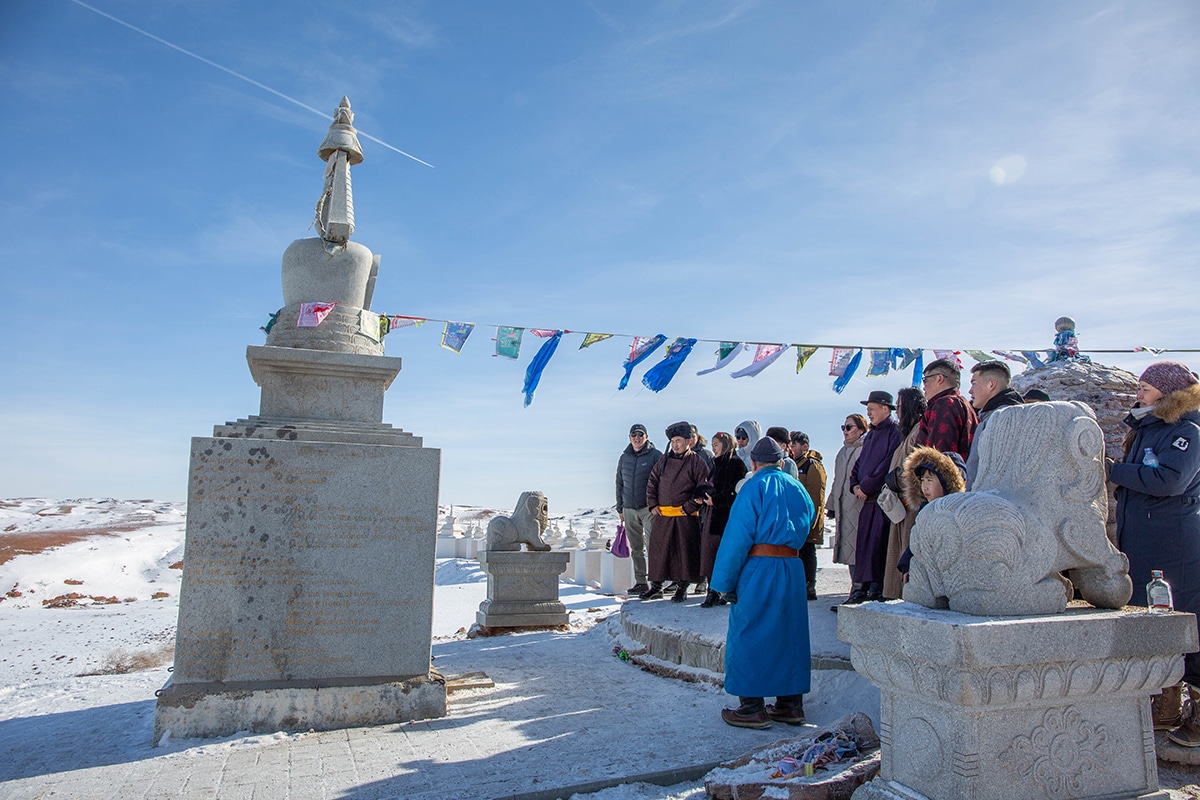
Ugii Lake Winter Festival
how to get there
🚌 By Bus (Public / State Bus)
Intercity buses to central provinces depart from Dragon Center in Ulaanbaatar. A bus to Kharkhorin (site of the ancient capital Karakorum) costs around MNT 25,000–35,000 (~$8–11) and takes roughly 6 to 7 hours, while buses to Tsetserleg in Arkhangai run about MNT 35,000–45,000 (~$11–14) and take 8 to 9 hours.
You can buy tickets at the bus terminal or online at eticket.transdep.mn. Buses stop periodically at small towns along the way for short breaks.
What to expect: Central Mongolia is one of the better-served regions, with daily departures to Kharkhorin and Tsetserleg in the travel season. The road west from Ulaanbaatar is paved for most of the route, making this one of the smoother long-distance bus rides in the country.
🚐 Shared Minivan
Private minivans wait at local markets and depart when full. This is the most common way locals travel between central towns like Kharkhorin, Tsetserleg, and Arvaikheer. It’s cheaper than hiring a private car, but you may wait hours for enough passengers to fill the van.
What to expect: No fixed schedule and no booking system. Show up at the market or bus area early in the morning and find the van heading your direction.
🚙 Private Car/Driver (Recommended for Real Exploration)
You can hire a driver and vehicle for around $80/day (car + driver), but factoring in the driver’s accommodation and entrance fees you cover, expect roughly $120/day total.
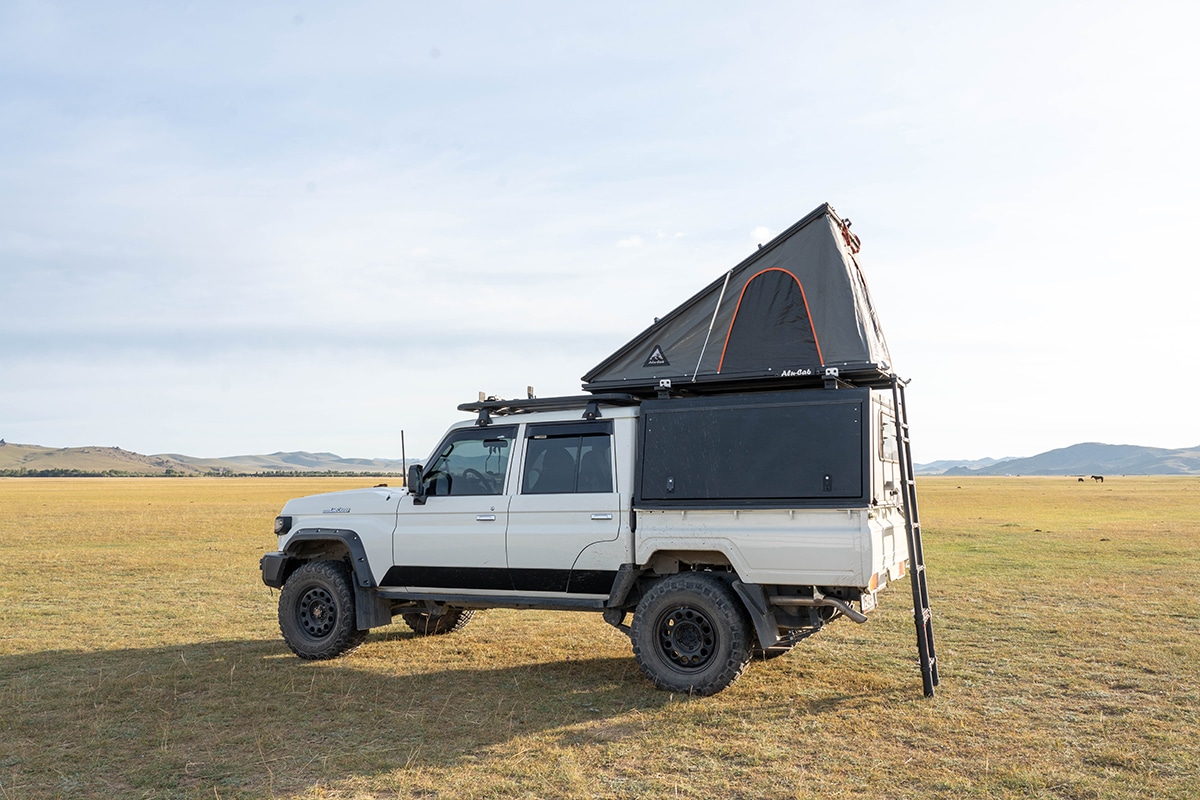
Central Mongolia is the one region where a standard car can handle more of the sights, since paved roads connect Ulaanbaatar to Kharkhorin and Tsetserleg. That said, a 4WD is still essential for the best of the region: the Orkhon Valley waterfall, Tsenkher hot springs, Terkhiin Tsagaan Lake, and the Eight Lakes area all lie down rough dirt tracks. Vehicles of choice include Toyota Land Cruisers (more comfortable) and the Russian-made UAZ-452 (easier to fix roadside, but prone to breakdowns).
How to book: Arrange through a Ulaanbaatar guesthouse or local tour operator, or ask at Dragon Center. Book well in advance for July and August, when the central loop is at its busiest.
✈️ Domestic Flight (Rarely Needed)
Central Mongolia is close enough to Ulaanbaatar that flying rarely makes sense. There is no commercial airport at Kharkhorin, and while Arvaikheer and Tsetserleg have airstrips, scheduled service is minimal to nonexistent. With a mostly paved road covering the 360 km to Kharkhorin, driving is the practical choice for nearly everyone.
🚂 Train (Not an Option)
The Trans-Mongolian rail line runs north to south well east of the central heartland and doesn’t serve Kharkhorin, the Orkhon Valley, or Arkhangai. Bus or private car are the realistic options here.
Key Things to Know
Even if you bus into Kharkhorin or Tsetserleg, you’ll still need a car and driver to reach the countryside sights. The towns are gateways, not destinations in themselves.
Summer rains in July and August can turn the dirt tracks of the Orkhon Valley muddy and slow, so build buffer time into your itinerary.
Always carry extra food and water, a tent, and warm sleeping bags when traveling remotely, even in this comparatively accessible region.
Cell coverage is decent in towns and along the main paved road but fades quickly in the valleys and mountains. Bring a physical map and compass as backup.
Bottom line: Central Mongolia is the easiest region to reach overland from Ulaanbaatar. Bus it on the cheap or drive the paved road to Kharkhorin, then switch to a 4WD and driver for the valleys, lakes, and hot springs beyond.