The first time I saw snow leopards in the wild, it was a mother and her two cubs. A local herder I knew in the area told us about a cave where they’d been living, and mentioned that if we were lucky, we might catch them sunning themselves on the lip of the cave that afternoon. We went, not really expecting much. And that’s exactly what happened.
They tolerated us for a little while, even though no matter how quiet and careful we tried to be, they clearly knew we were there the whole time. It’s one of the most magical things I’ve experienced in Mongolia, and still one of the coolest wildlife encounters of my life.
Most people have no idea Mongolia even has snow leopards. It’s a fact that surprises almost everyone I tell it to, but it shouldn’t. Mongolia is home to the second largest snow leopard population in the world, after China, and its remote, largely untouched mountains are one of the last places on earth where these animals still move freely, largely undisturbed by people.
Table of Contents
Where Do Snow Leopards Live in Mongolia?
Snow leopards are notoriously hard to study and even harder to count, but current estimates put a meaningful share of the world’s wild population inside Mongolia’s borders, concentrated in the country’s western and southwestern mountains. They live at high altitude, in rugged, rocky terrain that’s difficult for people to access and even harder to survive in, which is a large part of why the population has held on here while it’s collapsed in more developed parts of its range elsewhere.
They’re solitary, mostly nocturnal, and built for a landscape that punishes almost everything else. A single snow leopard needs an enormous home range to find enough prey, which is one of the reasons Mongolia’s vast, low density mountains matter so much for the species. In places with more people and more development, there simply isn’t room for them anymore.
Tracking Snow Leopards in the Wild
Snow leopards are found across Mongolia’s mountain systems, most notably in the Altai range in the west, near the Russian and Chinese borders, and in the Gobi-Altai further south, where arid mountains meet the edge of the Gobi Desert. In both regions, the cats move between rocky peaks and open valleys, following the ibex, argali sheep, and other prey that make up most of their diet.
This is also herder country. Snow leopards share this landscape with nomadic families who’ve lived alongside them for generations, and who often know more about a local population’s movements and behavior than any outside researcher could. That relationship, more than anything else, is why the population here has survived as well as it has.
Other Wildlife in Snow Leopard Country
Snow leopards are rarely the only thing moving through this terrain. Ibex and argali sheep are their primary prey and are often spotted on the same ridgelines and cliffs. Wolves and foxes share the same mountains, competing for many of the same food sources. If you’re ever out in this landscape, keep an eye out for all of it, not just the ghost cats.
How Snow Leopards Are Tracked and Studied
Because snow leopards are so elusive, almost all of what’s known about Mongolia’s population comes from indirect signs rather than direct sightings. Researchers and local trackers rely on camera traps set along ridgelines and travel corridors, along with tracks, scat, and other signs left behind, to piece together where a population is moving, hunting, and denning.
This kind of work takes patience most people don’t associate with wildlife research. It can take days or weeks of monitoring a single area to confirm a snow leopard has even passed through, let alone to catch one on camera. It’s slow, quiet work, done by people who understand that this landscape moves at its own pace, not a human one.
Why This Population Matters
Snow leopards are considered an indicator species, meaning their presence or absence says a lot about the overall health of the mountain ecosystems they live in. Where snow leopards are thriving, the prey populations, vegetation, and broader ecosystem beneath them tend to be healthy too.
Their survival in Mongolia also isn’t guaranteed. Climate change is altering the alpine habitats they depend on, and as infrastructure and mining expand into more remote parts of the country, the vast, undisturbed terrain that’s protected this population for so long is slowly shrinking. Local herder families and conservation organizations working in these regions play a direct role in keeping that pressure in check.
Author: Breanna Wilson
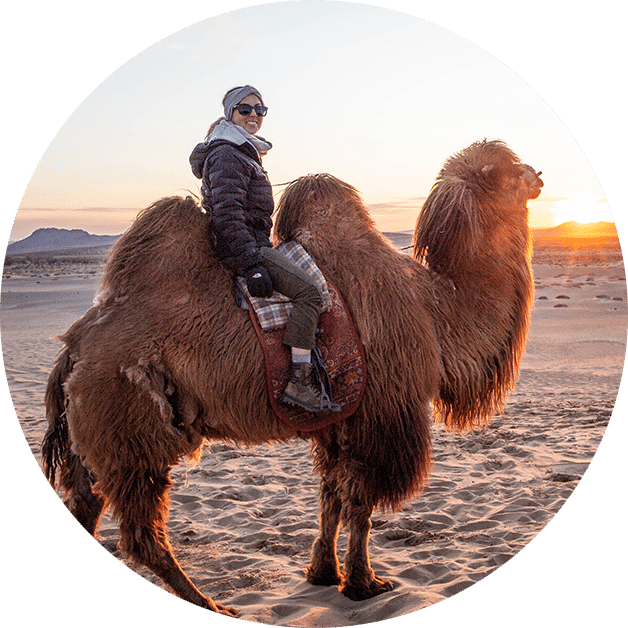
Hi! Sain uu! I’m Breanna, an American travel writer and adventurer living in Ulaanbaatar, Mongolia for more than 9 years. I’ve written for and been featured in Condé Nast Traveler, CNN, Forbes, and the New York Times, among others. Read more of my Mongolia travel articles here.
I did the snow leopard tour in October 2025 and it was transformative. I’ve travelled all my life in both luxury and adventure and found this trip unparalleled. Aagie lead the group thoughtfully and decisively, Khoz helped to keep it together and provided a Kazakh interface. The rest of the group included an expert biologist tracker, driver and herdsman and family. The insights that they collectively provided helped change my life view, hopefully for a long time to come.
Ed Singleton
5 months ago
Give us a Rating :
I joined the snow leopard tour in March, and it was incredible!!!!
From start to finish, the tour surpassed my expectations on every level. Our snow leopard guides Mo and Kairat were amazing, and we were lucky enough to see a large male snow leopard on two of the days. Even if we hadn’t seen a snow leopard, the trip would have been mind-blowing. Khoz, our local guide, was also incredible and made the best meals during our whole stay. Also, our driver, also called Kairat, was wonderful!





I did the snow leopard tour in October 2025 and it was transformative. I’ve travelled all my life in both luxury and adventure and found this trip unparalleled. Aagie lead the group thoughtfully and decisively, Khoz helped to keep it together and provided a Kazakh interface. The rest of the group included an expert biologist tracker, driver and herdsman and family. The insights that they collectively provided helped change my life view, hopefully for a long time to come.
I joined the snow leopard tour in March, and it was incredible!!!!
From start to finish, the tour surpassed my expectations on every level. Our snow leopard guides Mo and Kairat were amazing, and we were lucky enough to see a large male snow leopard on two of the days. Even if we hadn’t seen a snow leopard, the trip would have been mind-blowing. Khoz, our local guide, was also incredible and made the best meals during our whole stay. Also, our driver, also called Kairat, was wonderful!