
The Tsaatan Reindeer Herders of Mongolia: Who They Are and Where They Live
Mongolia’s Tsaatan people are one of the last reindeer-herding tribes on earth. Here’s where they live, how they migrate, and what makes their way of life so rare.
- Tour Type: Adventure
- Book Now (Private Itinerary)
- No Reviews
Deep in the taiga forest of northern Mongolia, near the Siberian border, lives one of the last communities on earth still built entirely around reindeer. The Tsaatan, also known as the Dukha, are believed to be the last people in the world who herd and ride reindeer as a genuine part of daily life, not as a display for visitors, but as the actual foundation of how they eat, travel, and survive. Only around 40 families still live this way today.
I’ve visited them twice, once in summer and once in the dead of winter, and the two trips could not have felt more different. In summer, reaching them meant riding for a full day and a half, over eight hours in the saddle, deep into the taiga with no road anywhere near us. In winter, the families come down somewhat from the high mountains, and depending on conditions, it’s sometimes possible to reach them by car instead. Same people, same way of life, but a completely different journey depending on the season.
Their homeland sits in Khövsgöl Province, in some of the most remote terrain in the country, close enough to Siberia that the landscape, climate, and way of life all carry that influence. It’s a part of Mongolia that feels entirely different from the open steppe most people picture when they think of the country: dense coniferous forest, high taiga ridgelines, and a level of isolation that’s genuinely hard to overstate. It’s also, consistently, one of the coldest and most exposed parts of the country I’ve traveled through. Up in that terrain, the weather turns unforgiving fast, and there’s very little shelter from it once you’re out in it.
Table of Contents
Everything you Need to Book for When You Land in Ulaanbaatar
Everything you need to book when you arrive in Ulaanbaatar.
🚕 Airport Transfer into the Ulaanbaatar City Center
Book your airport transfer before you land. Ulaanbaatar taxis are chaotic and this is worth the peace of mind.
🛌 Where to Stay
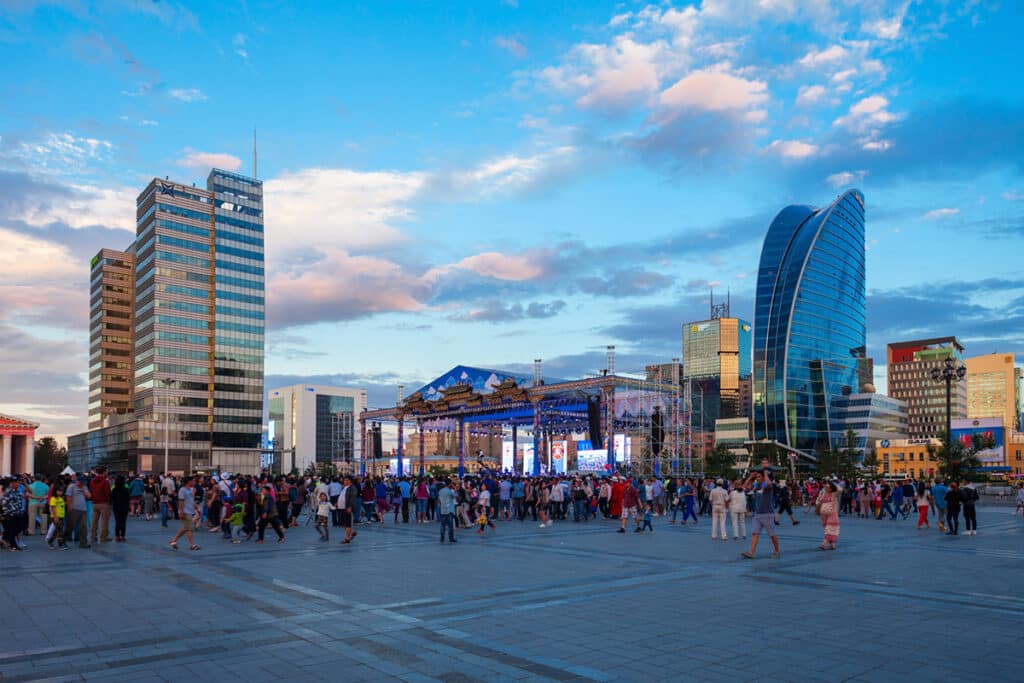
My picks at every budget, all within walking distance of Sukhbaatar Square:
→ Hostel One: best hostel in the city for solo travelers
→ Urgoo Hotel: locally owned boutique spot, great value and location
→ H9 Hotel Nine: steps from everything and great value (highly recommend!)
→ Best Western Premier Tuushin: 4-star hotel next to the square for a more comfortable stay and notable service (plus, a safe place to store luggage while you’re in the countryside)
👉 Make the Most of Your Time in the Capital
If you have extra days, these are the experiences I’d actually recommend:
→ Ulaanbaatar: Private Guided City Tour with Car
→ Cooking Class in a Local Home
→ Mongolian Traditional Dance & Music Concert Ticket
→ Chinggis Khaan Equestrian Statue & Terelj National Park
→ Ulaanbaatar: Private Nomad Horseback Ride + Homemade Lunch
Where the Tsaatan Live
The Tsaatan’s territory lies in the taiga north of Lake Khövsgöl, Mongolia’s largest freshwater lake, often called the country’s Mother Lake. Getting there starts with a flight from Ulaanbaatar to Mörön, the provincial capital and, as locals put it, the last major city before the roads turn to dirt.
From Mörön, the route continues by road toward the northernmost accessible villages near Ulaan-Uul, where the road itself simply ends. Beyond that point, how you get in depends entirely on the season. In summer, that means saddling up and riding, and riding, and riding. My own trip in was eight-plus hours, spread across a day and a half, before we ever reached camp. In winter, the families’ camps sit lower and closer to reach, which sometimes makes a vehicle possible for at least part of the way in.
This inaccessibility isn’t incidental. It’s a large part of why this way of life has survived here when it’s disappeared almost everywhere else. The taiga is sparsely populated, difficult to reach, and shaped by conditions that demand real skill to live in, exactly the kind of place where an old, specific relationship between people and animals can keep going largely undisturbed.

Life Built Around Reindeer
Reindeer are at the center of nearly everything in Tsaatan life. Families milk them daily, ride them the way most of Mongolia rides horses, and rely on them for transportation through terrain that would otherwise be nearly impossible to move through.
One of my favorite memories from either trip was heading out with the family by reindeer to collect firewood, riding through the forest alongside them, then loading the wood onto the backs of other reindeer to carry back to camp. It’s such a simple, practical task, and also completely unlike anything else I’ve experienced. You’re not observing their way of life from a distance at that point, you’re just doing the thing with them.
Reindeer milk is also a staple, and it makes an incredible milk tea, richer and more full-bodied than anything made with cow’s milk. They also make a cheese from it that I still think about. The first time you try it is one of those small, specific food memories that just sticks with you.
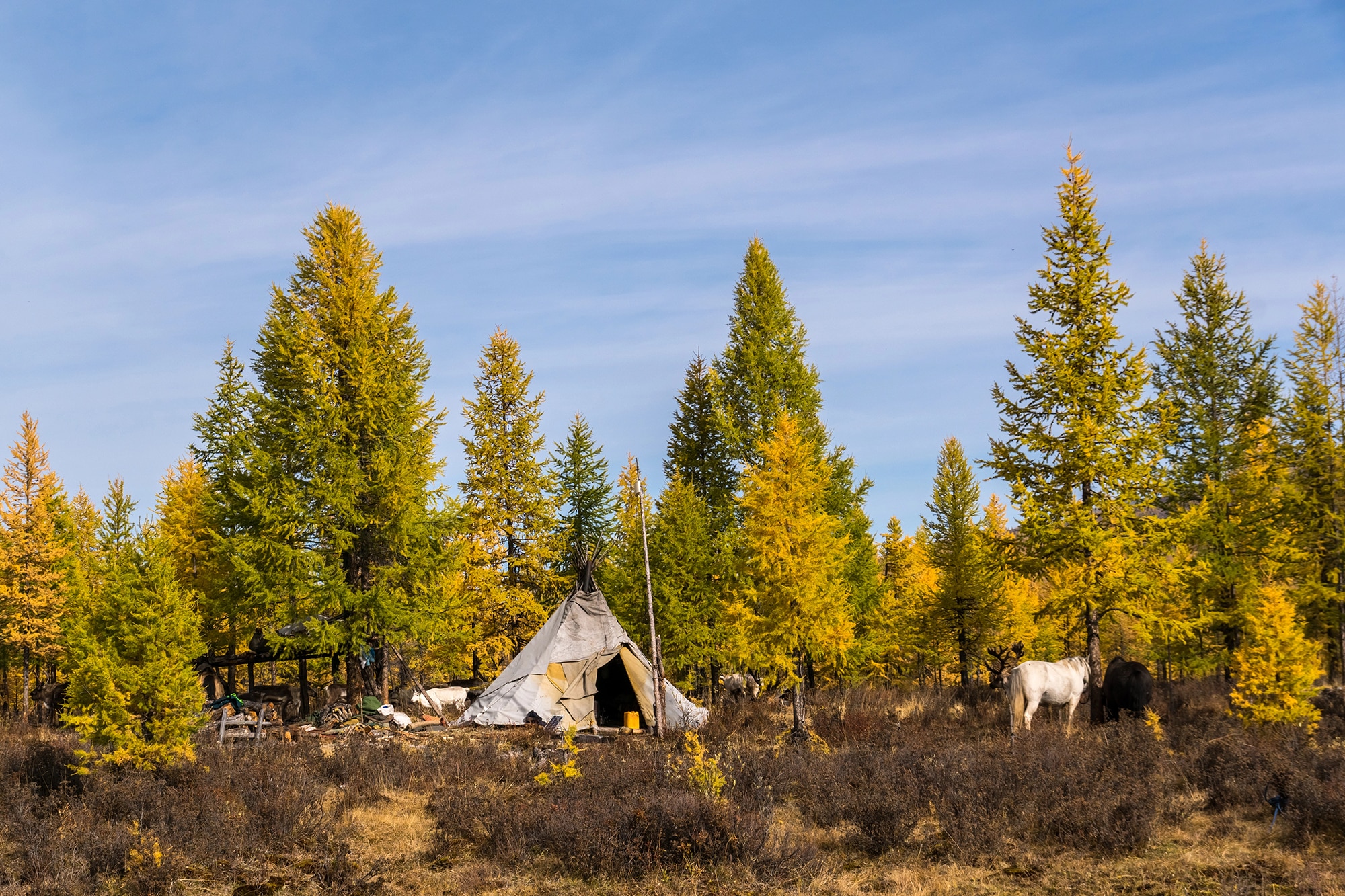
The Tsaatan live in ortz, cone-shaped structures similar in form to a teepee, built from long wooden poles covered in canvas or hide. They’re different from the ger, or yurt, that most of Mongolia lives in. A ger is round, built on a collapsible wooden lattice frame, and designed to hold heat efficiently, it’s the structure most associated with Mongolian nomadic life more broadly. An ortz is taller, narrower, and conical, built to be put up and taken down quickly as the family relocates with their reindeer, and it reflects a completely different set of needs: less about heat retention and more about being fast to move and suited to forest terrain rather than open steppe.
And they do relocate, following what’s often described as the law of the taiga: an understanding of balance and respect for the land that governs when and where a family moves their reindeer to find better grazing and avoid depleting any one area. Because of this, Tsaatan camps aren’t fixed in one place year round. There’s a distinct spring camp and a distinct fall camp, among other seasonal locations, each chosen based on where the reindeer need to be at that time of year. Visiting in different seasons genuinely means visiting a different physical location, not just different weather at the same spot.
Shamanic tradition also remains an active part of Tsaatan spiritual life, and it’s often woven into daily life and hospitality rather than set apart as a separate performance.
The Landscape Around Them
The taiga here is thick with pine, spruce, and larch, and the terrain is genuinely demanding, some of the harshest environments in the country. Along the route into Tsaatan territory, travelers also pass ancient deer stones, Bronze and Iron Age standing stones carved with imagery believed to date back to somewhere between 1400 and 700 BCE, a reminder of just how long people have moved through this part of Mongolia.
Lake Khövsgöl itself is a major landmark on the way in and out, vast, clear, and considered sacred by many Mongolians. A well known Wish Rock sits along its shore, and in winter, the lake freezes over completely, becoming a strange, silent expanse that can be crossed on foot or by vehicle. Beneath that ice, rivers like the Duut, considered sacred and tied by local tradition to motherhood, keep flowing all winter long.

When to Visit
Timing changes what kind of experience you’ll have, since the Tsaatan themselves are on the move throughout the year, and since access itself depends on the season.
Summer means riding in, often for the better part of a day or more, but it also means green forest, easier weather, and camps set higher in the mountains.
Fall brings a dramatic shift in the landscape, with the taiga turning deep red, orange, and gold, and families settled at their fall camp.
Winter, especially late February into early March, is the most extreme but also the most culturally rich time to visit, coinciding with reindeer festivals that are genuinely put on by locals, for themselves, not for tourists. I spent a night in an ortz in the middle of February once, with temperatures at -35°C, alongside six other women who were every bit as up for the adventure as I was. It’s one of the coldest nights I’ve ever spent, and still one of the most memorable. Nomadic homes in this region are not heavily insulated, and fires often go out overnight, so you feel that cold in a way that’s hard to describe until you’ve actually experienced it. But there’s something about sharing that kind of night, in that kind of place, with people who are just as thrilled to be there, that makes it worth every bit of the discomfort.

What Makes This So Rare
There’s a reason the Tsaatan are often described as the last of their kind. Reindeer herding as a full way of life, not a symbolic or occasional practice, but the actual structure of how a community eats, travels, and organizes its year, has disappeared almost everywhere else it once existed. What’s kept it alive here is largely the same thing that makes it hard to visit: remoteness, difficult terrain, and a community that has continued to prioritize this relationship with their animals and their land over the pressures that have ended it elsewhere.
For generations, Mongolians across the country have gathered around their animals each winter to honor what makes survival possible, reindeer, horses, and livestock alike. In the taiga, that gratitude isn’t a seasonal gesture. It’s simply how life here has always worked, and having experienced even a small piece of it firsthand is something I don’t take for granted.

Author: Breanna Wilson
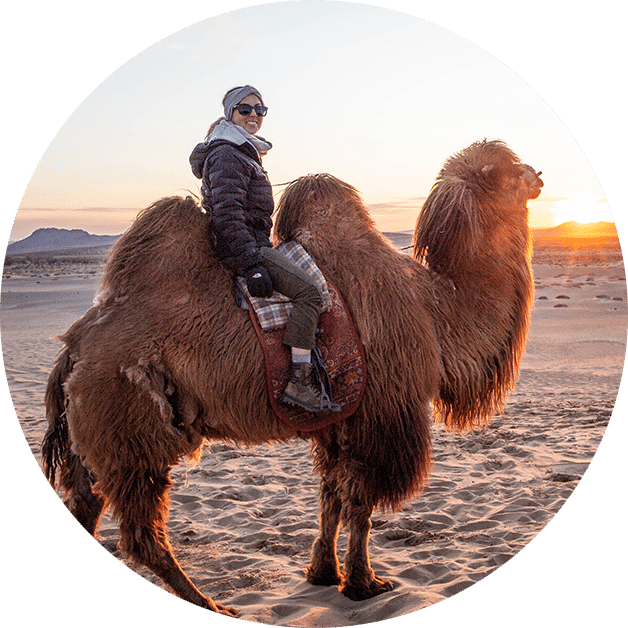
Hi! Sain uu! I’m Breanna, an American travel writer and adventurer living in Ulaanbaatar, Mongolia for more than 9 years. I’ve written for and been featured in Condé Nast Traveler, CNN, Forbes, and the New York Times, among others. Read more of my Mongolia travel articles here.
Are you visiting Mongolia for the first-time and stuck in the planning process?
Get my first-time visitor’s essential planning guide, Into the Steppe, now! Inside you’ll find everything you need to research, plan, and book the ultimate Mongolia adventure.
This Mongolia digital travel guide costs $9.99 and will help you answer the questions:
- When to visit and for how long
- Which region to visit and sample itineraries
- How to get there (including domestic flight info)
- Expert packing tips with gear recommendations
- Accommodations explained (hotel vs ger camp vs homestay)
- And who to book your trip with!
Other Popular Tours:

Join our Private MIM Community on Facebook
Proudly Based in Ulaanbaatar, Mongolia
© 2026 Meanwhile in Mongolia