
The Eight Lakes Horse Trek in Mongolia: What to Know Before You Go
A guide to Mongolia’s Eight Lakes horse trek through the Khangai Mountains, one of the country’s most remote multi-day rides, accessible only on horseback.
Long before roads and vehicles shaped how people moved through Mongolia, horseback was the way this country was traveled. The Eight Lakes trek, through the Khangai Mountains and the remote Huisiin Naiman Nuur region, is one of the clearest ways to experience that today. It’s a multi-day journey through terrain that, in many stretches, simply can’t be reached any other way, not by car, not on foot in any practical sense, only on horseback or with pack animals.
Table of Contents
Everything you Need to Book for When You Land in Ulaanbaatar
Everything you need to book when you arrive in Ulaanbaatar.
🚕 Airport Transfer into the Ulaanbaatar City Center
Book your airport transfer before you land. Ulaanbaatar taxis are chaotic and this is worth the peace of mind.
🛌 Where to Stay
My picks at every budget, all within walking distance of Sukhbaatar Square:
→ Hostel One: best hostel in the city for solo travelers
→ Urgoo Hotel: locally owned boutique spot, great value and location
→ H9 Hotel Nine: steps from everything and great value (highly recommend!)
→ Best Western Premier Tuushin: 4-star hotel next to the square for a more comfortable stay and notable service (plus, a safe place to store luggage while you’re in the countryside)
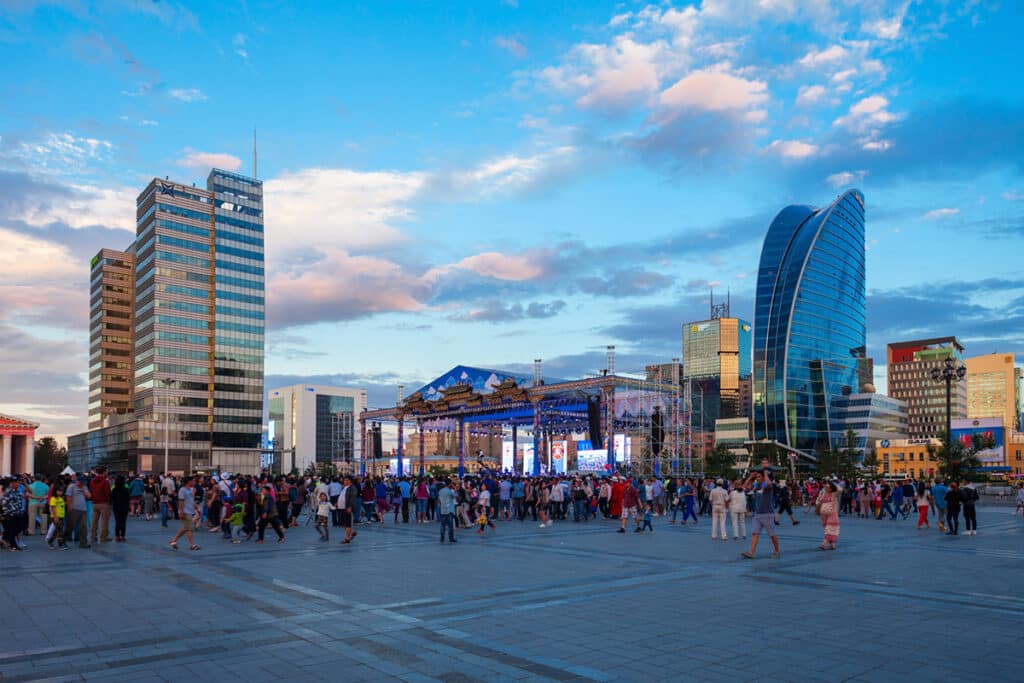
👉 Make the Most of Your Time in the Capital
If you have extra days, these are the experiences I’d actually recommend:
→ Ulaanbaatar: Private Guided City Tour with Car
→ Cooking Class in a Local Home
→ Mongolian Traditional Dance & Music Concert Ticket
→ Chinggis Khaan Equestrian Statue & Terelj National Park
→ Ulaanbaatar: Private Nomad Horseback Ride + Homemade Lunch
Where the Trek Goes
The route moves through the Khangai Mountains, one of Mongolia’s most varied and scenic regions, crossing high mountain passes, forested valleys, volcanic rock formations, and open alpine meadow. At the heart of it is Huisiin Naiman Nuur, the Eight Lakes themselves, a cluster of interconnected lakes linked by underground water systems and tucked deep into the mountains.
Each lake in the group has its own character. Riders typically pass through several of them in succession, including Khaliut, Bugat, Khayaa, Shanaa, Huisiin, Duroo, Bayan, and Shireet, each framed differently by forest, open meadow, or volcanic terrain. Because the region is only accessible by horse, foot, or pack animal, it’s stayed remarkably untouched, and riding through it feels less like following a trail and more like moving through a landscape that hasn’t changed much in a long time.
Many versions of this trek continue on to Ulaan Tsutgalan, also known as Orkhon Waterfall, one of the most recognizable natural landmarks in central Mongolia, where the Orkhon River drops into the valley below. From there, the wider Orkhon Valley and the ancient capital of Kharkhorin, home to Erdene Zuu Monastery, Mongolia’s oldest surviving Buddhist monastery, are natural extensions for anyone looking to pair the ride with some history.

What the Riding Is Actually Like
This is not a beginner’s trail ride. Multi-day treks through this region typically involve consecutive days in the saddle, crossing genuinely challenging terrain: steep mountain passes, river crossings, forest, and volcanic rock. Some prior riding experience makes a real difference here, both for comfort and for how much you’re able to relax into the trip rather than fight the terrain.
Nights along the route are usually spent in a mix of settings, tent camps near the lakes themselves, ger camps, and homestays with nomadic herder families along the way. That variety is part of what makes the trek feel like more than just a ride. Sharing a meal with a herder family after a long day in the saddle, or waking up beside a lake that took hours on horseback to reach, is a different kind of travel than most people are used to.

When to Go
The Khangai Mountains are only reliably accessible for horse trekking from roughly June through mid September. Outside that window, high passes can hold snow well into early summer, and conditions turn cold and unpredictable again by early autumn. Even within that window, weather at this elevation can shift quickly, so it’s worth being prepared for cool mornings and evenings even in the height of summer.
Is This Trek Right for You
This route rewards people who genuinely want to be challenged, physically and logistically, not just scenically. Full days on horseback, remote overnight stays, and real distance from roads or cell service are all part of the experience, not incidental to it. If that sounds appealing rather than daunting, the Eight Lakes region is one of the most rewarding multi-day rides in the country.
If you’re newer to horseback riding, it’s worth spending time in the saddle before attempting a trek at this length and difficulty. This isn’t the place to learn to ride for the first time, it’s the place to put real riding experience to use in one of the most remote corners of Mongolia.
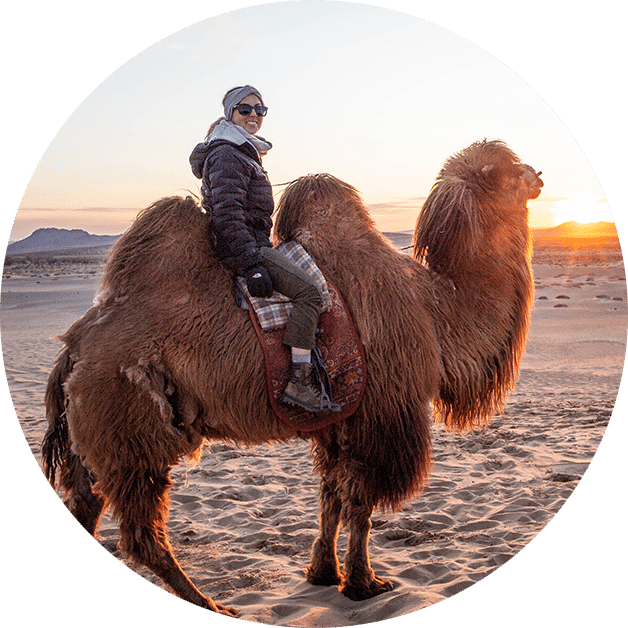
Author: Breanna Wilson
Hi! Sain uu! I’m Breanna, an American travel writer and adventurer living in Ulaanbaatar, Mongolia for more than 9 years. I’ve written for and been featured in Condé Nast Traveler, CNN, Forbes, and the New York Times, among others. Read more of my Mongolia travel articles here.


Join our Private MIM Community on Facebook
Proudly Based in Ulaanbaatar, Mongolia
© 2026 Meanwhile in Mongolia