
Hiking in Altai Tavan Bogd: Where to Go and When to Visit
Mongolia’s Altai Tavan Bogd National Park is one of the most dramatic mountain regions in the country. Here’s where to hike, what to expect, and when to visit this incredible region.
I’ve only been out to this region a handful of times, and every single time, it’s caught me off guard. Standing in front of Potanin Glacier, looking out at the peaks around it, is one of those moments that’s genuinely hard to put into words. Most people picture Mongolia as endless steppe, horses, gers, wide open grassland, and that picture isn’t wrong, but it’s incomplete. Almost no one expects mountains like this to exist here, which is exactly what makes the first time you see them so disorienting in the best way.
Stretching across Mongolia’s far western reaches, the Altai Mountains form one of the last truly untamed mountain wildernesses on earth. The range runs roughly 1,000 kilometers from the Russian border in the northwest down toward the Gobi-Altai in the south, and it’s a landscape of real contrasts: jagged, glaciated peaks rising above wide steppe valleys, with braided glacial rivers cutting through terrain that sees almost no foot traffic.
At the heart of it is Altai Tavan Bogd National Park, arguably the most dramatic and least visited national park in Mongolia. For hikers willing to make the trip out to Bayan-Ölgii province, it’s a genuinely humbling place to spend a few days on foot, and in my opinion, one of the most untapped hiking destinations left in the world.
Table of Contents
Want to Explore on Your Own? Start Planning
Understanding how things work in Ulaanbaatar can be confusing. Here are some places I wish someone showed me as a first time overlander or independent traveler.
🚙 Book a Rental Car
Book a car rental and travel Mongolia at your own pace. No tour, no guide, just you and the open road.
🛌 Hotels & Guesthouses with Parking
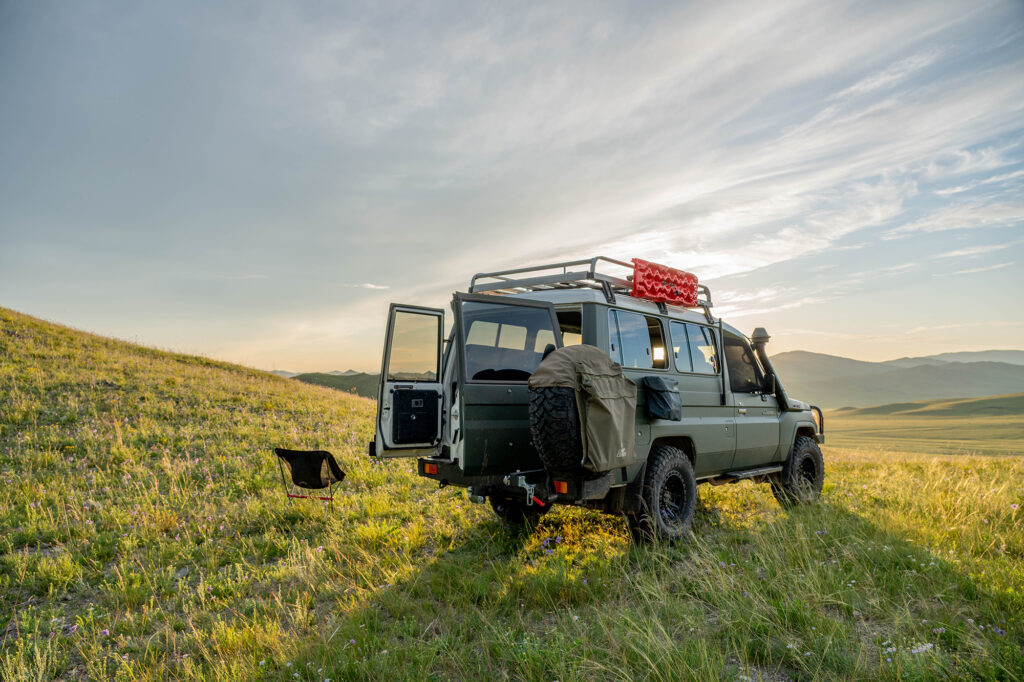
Where to stay in Ulaanbaatar when you have an oversized or large vehicle:
→ Zaya Stays: this actually was my first apartment when I moved to Mongolia, so I know there’s a small but easily accessible lot in the back inside a private gate. I used to keep my Ural motorcycles back there!
→ Bayangol Hotel: central and with parking out front
→ Khubilai Hotel Ulaanbaatar: located on the city outskirts with plenty of parking for oversized vehicles available and easy to maneuver into
👉 Where to Grocery Shop & Buy Camping Gear
→ E-mart Khan-Uul: this is my grocery store of choice thanks to an open parking lot that doesn’t have a height restriction and I can find absolutely everything I need here. Visit in the morning to avoid the crowds, especially on weekends
→ Zoomlink: rent a Starlink Mini for your trip (12v)
→ Outdoor World: this huge outdoor shop has everything when it comes to gear and camping equipment
Why Altai Tavan Bogd Is Different
The highest summits in Mongolia cluster in the Tavan Bogd, meaning Five Saints, massif, where Khuiten Peak reaches 4,374 meters and marks the country’s highest point. Potanin Glacier, Mongolia’s largest, sits within this massif, and permanent ice drapes the upper ridges throughout the range, feeding rivers that run down through valleys shared by snow leopards, argali sheep, ibex, and golden eagles. Below the snowline, larch forest gives way to rolling alpine meadow, dotted with the gers of local Kazakh herders.
Because of how remote this region is, it hasn’t been shaped by tourism the way some of Mongolia’s more accessible landscapes have. Trails here are quiet, distances are real, and the terrain still feels genuinely wild. It’s a hard place to describe to someone who hasn’t stood in it themselves, and one of the main reasons I keep coming back.

Where to Hike
If I were traveling to Altai Tavan Bogd National Park for the first time, here’s where I’d go.
Baga Durgen Waterfall
A moderate hike following the river through alpine terrain, leading up to a waterfall that cascades down from the Altai peaks above. It’s a solid introduction to the terrain, following water through the valley rather than climbing steeply.
Khoton Lake
The trail along Khoton Lake opens into wide mountain views, river crossings, and quiet alpine meadows. It’s one of the more scenic stretches in the park, and a good example of how the landscape shifts constantly here, from rocky valley to open water to grassland within the same day.
Khoton and Khurgan Lakes, and the Petroglyphs
Wooden bridges connect Khoton and Khurgan Lakes, and the trail between them passes ancient petroglyph sites carved by early nomadic cultures. It’s a rare chance to combine a genuinely beautiful hike with a direct look at how long people have been moving through this landscape.
Most hiking in the park stays in the moderate range, easy to moderate terrain at elevation, but the altitude and remoteness make even a moderate day feel more demanding than the distance alone would suggest.
Getting There
Access starts with a flight from Ulaanbaatar to Ölgii, the main town in Bayan-Ölgii province and the gateway to the Altai. From Ölgii, it’s roughly five to six hours by 4WD, largely off road, to reach the national park itself. This is remote country. Once you’re in the park, expect no cell service and no infrastructure beyond what you bring in with you.

When to Go
Summer and early autumn are the most reliable windows for hiking in the Altai, with September being a particularly good stretch before winter sets in. Conditions can shift quickly at this elevation, though, and it helps to think of a trip here as two different climates layered on top of each other.
In Ölgii itself, September days typically reach around 14°C (57°F), with nights dropping to around 1°C (34°F). Up in the national park, at higher altitude and further from any shelter, conditions run noticeably colder and less predictable. Days can be sunny and mild, but temperatures drop fast once the sun goes down, and rain or even snow at higher elevations is always possible.
Layering is the single most important thing to plan around here. A warm base layer, a solid mid layer like fleece or light down, and a windproof, waterproof outer shell will get you through most of what this range throws at you. Don’t skip a warm hat, gloves, and wool socks either, they’re easy to forget and hard to replace once you’re out in the mountains.

What to Expect
This isn’t a casual walk. You’re hiking at altitude, in a remote part of the country, often multiple days from the nearest town. Weather changes quickly, distances are real, and self sufficiency matters more here than in most other parts of Mongolia. That said, none of this requires technical climbing experience, it’s more about being prepared for changeable conditions and comfortable spending long days outdoors.
Every time I’ve made the trip out here, it’s reminded me how little most people, including a lot of experienced travelers, know this side of Mongolia even exists. If you love wild, quiet mountain landscapes and don’t mind working a little to reach them, this is about as rewarding as it gets.
Author: Breanna Wilson
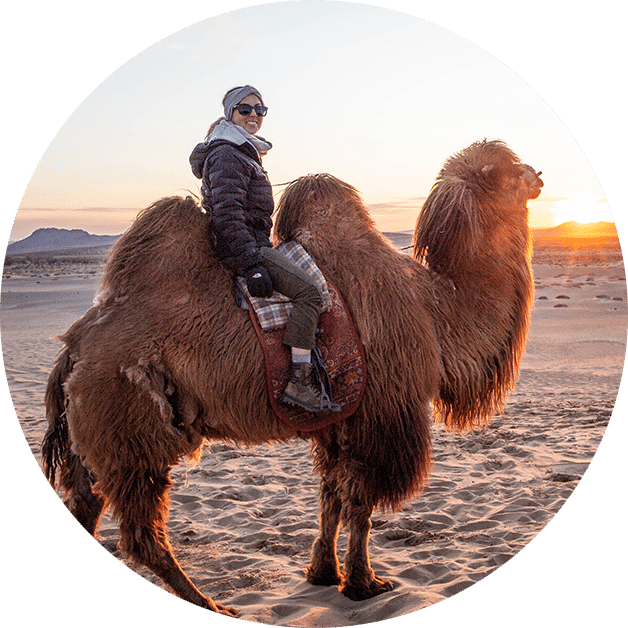
Hi! Sain uu! I’m Breanna, an American travel writer and adventurer living in Ulaanbaatar, Mongolia for more than 9 years. I’ve written for and been featured in Condé Nast Traveler, CNN, Forbes, and the New York Times, among others. Read more of my Mongolia travel articles here.


Join our Private MIM Community on Facebook
Proudly Based in Ulaanbaatar, Mongolia
© 2026 Meanwhile in Mongolia