
Mongolia in Winter: 19 Things to Do When Temperatures Drop
Mongolia in winter doesn’t have to be intimidating. Temperatures might be between -25 and -40 degrees Celsius, but there are still plenty of things to do from dog sledding to ice festivals.
Table of Contents
Mongolia in winter sounds intimidating. It is true that -40 C is nothing to scoff at. But Mongolians keep their yurts warm and their spirits high. Even when the winter temperatures outside are well below freezing.
In Ulaanbaatar, temperatures aren’t as brutal as the rest of the country, averaging -25 C in December and January. Those winter temperatures have even earned Ulaanbaatar the coldest capital in the world title. Just because it’s one of the coldest places on earth doesn’t mean it’s not worth visiting in the off-season. In fact, there are plenty.
For one, Mongolia enjoys an average of 250 days of sunshine each year. This is how the country became known as the Land of the Eternal Blue Sky. So at least there’s that.
Speaking of blue skies, something important to know before you go is that Ulaanbaatar is also known for the air pollution that overtakes the city when the temperatures drop. It used to be rated as one of the worst cities in the world for air pollution and air quality, but this has been improving in recent years. Thanks to non-profit and government initiatives, there is less raw coal being burned in the outlining ger districts. This is the major contributor to the air pollution. While the air quality and overall air pollution has improved, especially over the last five years, the city still has a way to go.
Despite this, Mongolia in winter is still beautiful. Especially once you leave Ulaanbaatar and its air pollution in your rear view mirror.
While the best time to visit Mongolia is generally summer, traveling here in winter has its perks. Big, beautiful, adventure-filled perks that will give any top cold weather destination in the world a run for its money.
In this travel guide I’ll explain the things worth braving a Mongolian winter for and offer a few winter travel tips.
Planning Your Trip? Here's Where to Start
Understanding how things work in Mongolia can be confusing. Here are some things I’d book for my first trip to the country.
🚕 Airport Transfer into Ulaanbaatar
Book your airport transfer before you land. Ulaanbaatar taxis are chaotic and this is worth the peace of mind.
🛌 Where to Stay
My picks at every budget, all within walking distance of the main square:
→ Hostel One: best hostel in the city for solo travelers
→ Urgoo Hotel: locally owned boutique spot, great value and location
→ H9 Hotel Nine: steps from Sukhbaatar Square, ideal for first-time visitors
→ Best Western Premier Tuushin: 4-star hotel next to Sukhbaatar Square, super comfortable
👉 Make the Most of Your Time in Ulaanbaatar
If you have extra days, these are the day tours and 1-day experiences that start and end in Ulaanbaatar I’d actually recommend:
→ Ulaanbaatar: Private Guided City Tour with Car
→ Cooking Class in a Local Home
→ Mongolian Traditional Dance & Music Concert Ticket
→ Chinggis Khaan Equestrian Statue & Terelj National Park
→ Ulaanbaatar: Private Nomad Horseback Ride + Homemade Lunch
Why You Should Consider Mongolia in Winter: Best Rates & Less Crowds
Consider visiting Mongolia in winter for:
- Cheaper rates and best value, get more for less!
- No crowds
- Serene landscapes and untouched views
- Warm hospitality
- More local experiences, including smaller wrestling tournaments
- Tsagaan Sar (Mongolian Lunar New Year)
Winter is the off-season for travel in Mongolia. Tourism peaks in Mongolia in July, with most travelers visiting between May and October. After that, the country is practically devoid of tourists.
Because of this, many yurt camps and lodges close for the winter. But not all of them. Hotel prices are at their lowest rates and tour guides are more willing to negotiate on their daily rates. (Not that I condone this, a good guide in Mongolia is worth whatever they’re asking for, trust me.)
Basically, winter is the cheapest time to travel to Mongolia.
And, in winter, some parts of the country are extremely difficult to travel to. But hey, that’s half the adventure.
If you’re willing to brave Mongolia’s winter temperatures, you’re rewarded with beautiful landscapes, practically exclusive access to unique cultural events and holidays, and you’ll surely earn the respect of more than a few local Mongolians.
Like any undiscovered and untapped destination, it’s these places, festivals, and people who make traveling to Mongolia in winter worth your time and money.
Keep in mind that Mongolia’s winter activities aren’t your typical ones. While there are ski slopes here, the best things to do in winter in Mongolia includes ice festivals, dog sledding, and eating fatty, hearty traditional Mongolian food with a swig of Chinggis Gold vodka to wash it all down.
How cold does it get in Mongolia?
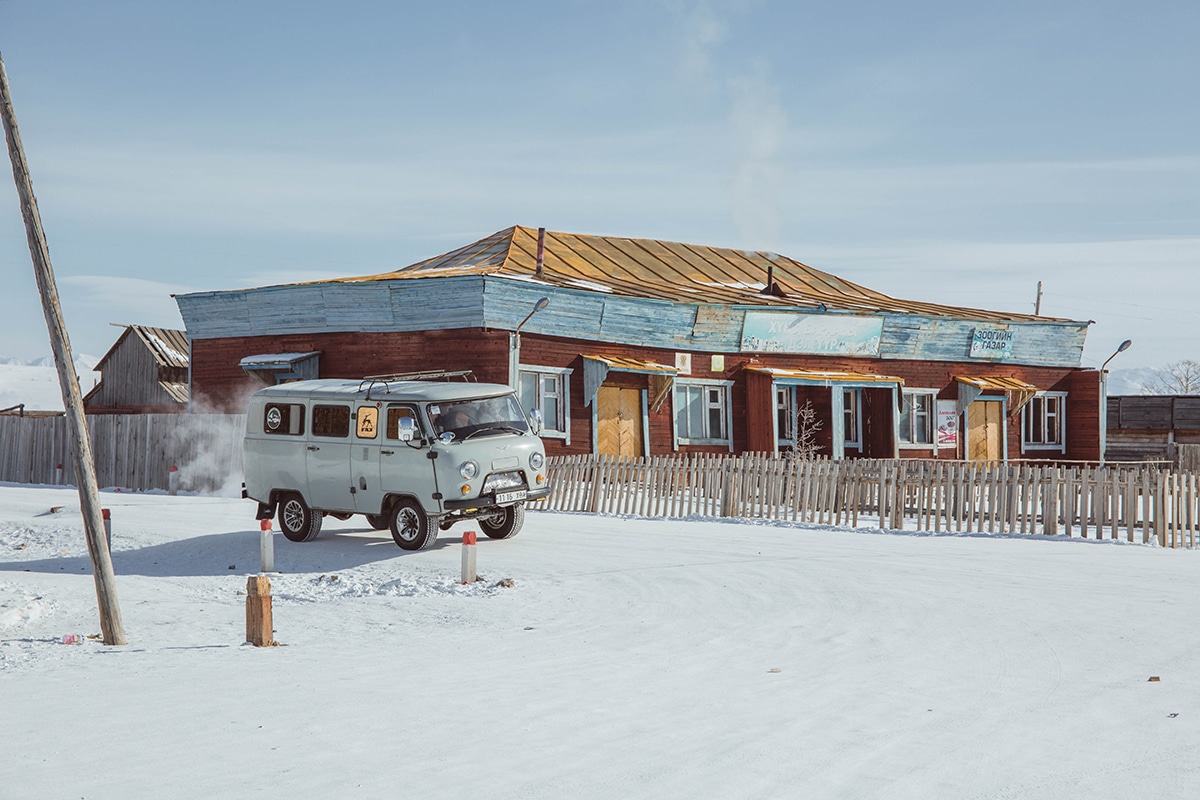
There’s no way around it, winter in Mongolia is cold. Mongolian winters (December – February) are among the coldest in the world for a populated country.
Regions across the country can reach -50°C while Ulaanbaatar averages -30°C in winter. January is typically the coldest month of the year, and the driest.
Freezing temperatures, wind, snow, and ice can be an issue if you plan to travel to different parts of Mongolia in winter. Not dressing properly can quickly lead to frostbite and cars are known to not start when temperatures are this cold.
If you plan to travel in Mongolia in winter, hire an experienced driver with a winterized car and never travel without a clear plan. This is not a place to get lost, get stuck in the snow, or find yourself having car trouble. By traveling with a local, they’ll know of winter weather conditions and warnings, and if certain regions should be avoided at certain times. Their knowledge when it comes to this type of travel is invaluable, don’t forget that.
The Coldest Capital on Earth
The first winter I ever spent in Ulaanbaatar back in 2020 really tested my limits. I didn’t know cold until I knew Mongolia cold. Today, I’m more prepared for the cold winter months, having adapted my wardrobe and my attitude to survive in the world’s coldest capital where nights are typically below −30°C, and cold snaps can reach −40°C.
Thankfully, the capital doesn’t typically see a lot of snowfall due to the dry air. Pair that with days that are usually sunny and clear, and it makes the cold much easier to bear.
The hardest part of living in the capital can be the temperature swings, which can be 15–20°C between day and night.

How much snow does Mongolia get?
Speaking of snow, in Mongolia in general, snow is to be expected in the winter months. Snow is typically light and frequent, and the sky is usually clear. In January, Mongolia averages six hours of sunshine a day. In December the average hours of sunshine is five hours and in February the average is seven hours. People are usually pleasantly surprised with the amount of daylight each day during the winter, I know I was.
In January, two millimeters of precipitation is average, while 3 millimeters is average in December.
Walking through Ulaanbaatar in December, January, and February, expect snow-covered sidewalks and slushy streets. The first big snow usually rolls around in December, but it’s not uncommon for it to snow in October and November.
Winter boots are a must. Boots with good traction and insulation are highly recommended. For extra stability, consider a pair of ice cleats that easily slide over your shoes. Keep reading to see my full winter packing list below.
19 Best Things to Do in Mongolia in Winter
While most places on this list are some of the best places to visit in Mongolia any time of year, winter brings new life and new reason to get to these destinations.
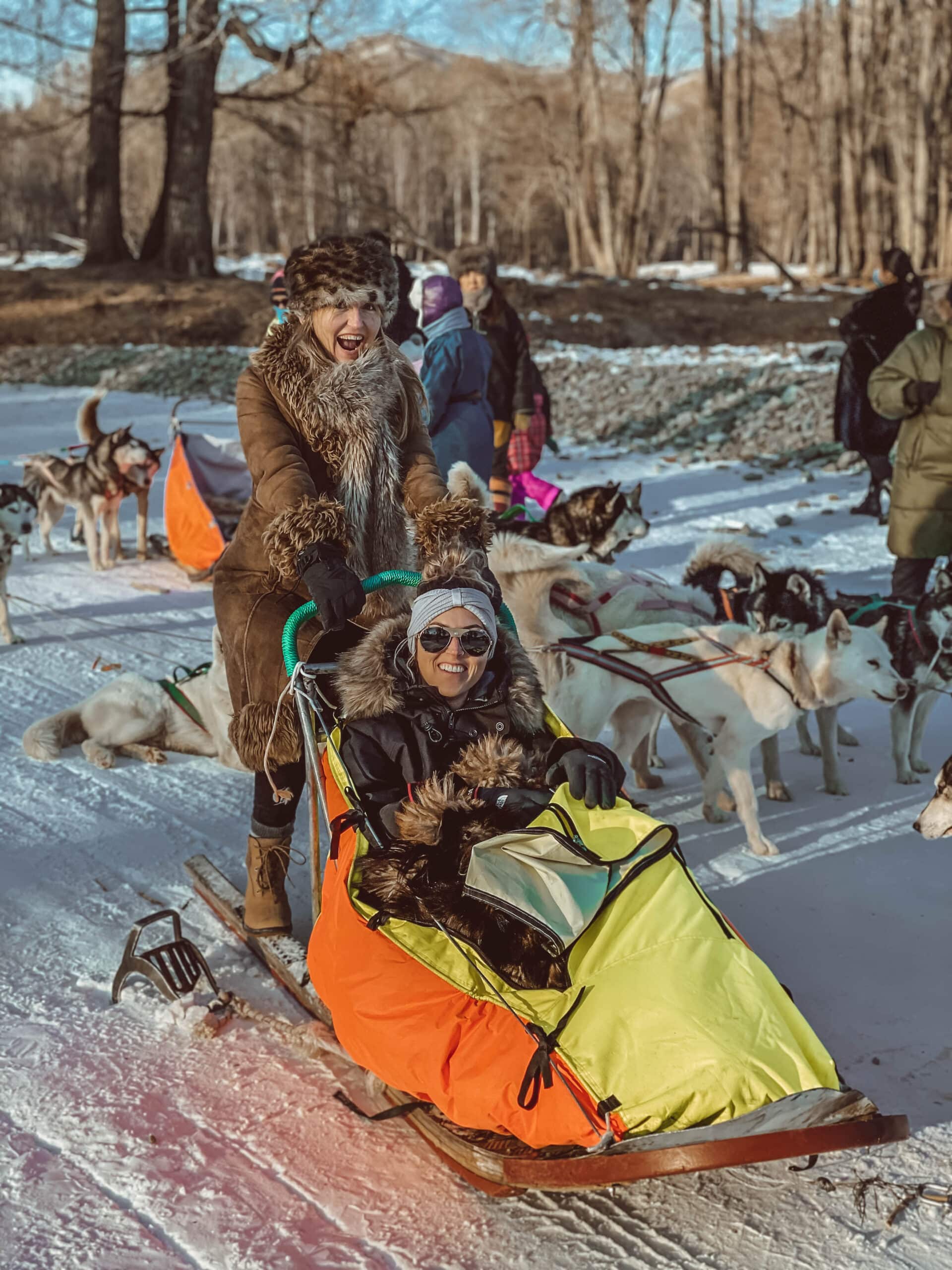
Dog Sledding in Terelj National Park
Gorkhi-Terelj National Park is one of the best day trips from Ulaanbaatar, and in winter it becomes even better thanks to its dog sledding tours.
Most dog sledding tours last a few hours and include everything you need to stay comfortable on the ride, from warm jackets to extra blankets. For a more immersive adventure, you can also book a multi-day dog sledding expedition deep into the park’s snowy valleys and forests.
There’s plenty more to do while you’re there. Ride a camel in its thick winter coat, go horseback riding through the snow-covered hills, and stop at the Genghis Khan Equestrian Statue on the way, where you can climb up to a viewing platform on the horse’s head.
The drive from Ulaanbaatar takes about 1.5 hours, so if you time it right, you can be back in the city in time for happy hour. If you’d rather see what it’s like to sleep in a ger in the middle of winter, spend the night at one of the park’s ger camps that stay open year-round (linked below).
CLICK HERE: 1-day dog sledding day trip trip in Terelj National Park →
CLICK HERE: Sleep in a winter ger when you go to Terelj →
Attend the Annual Ice Festival
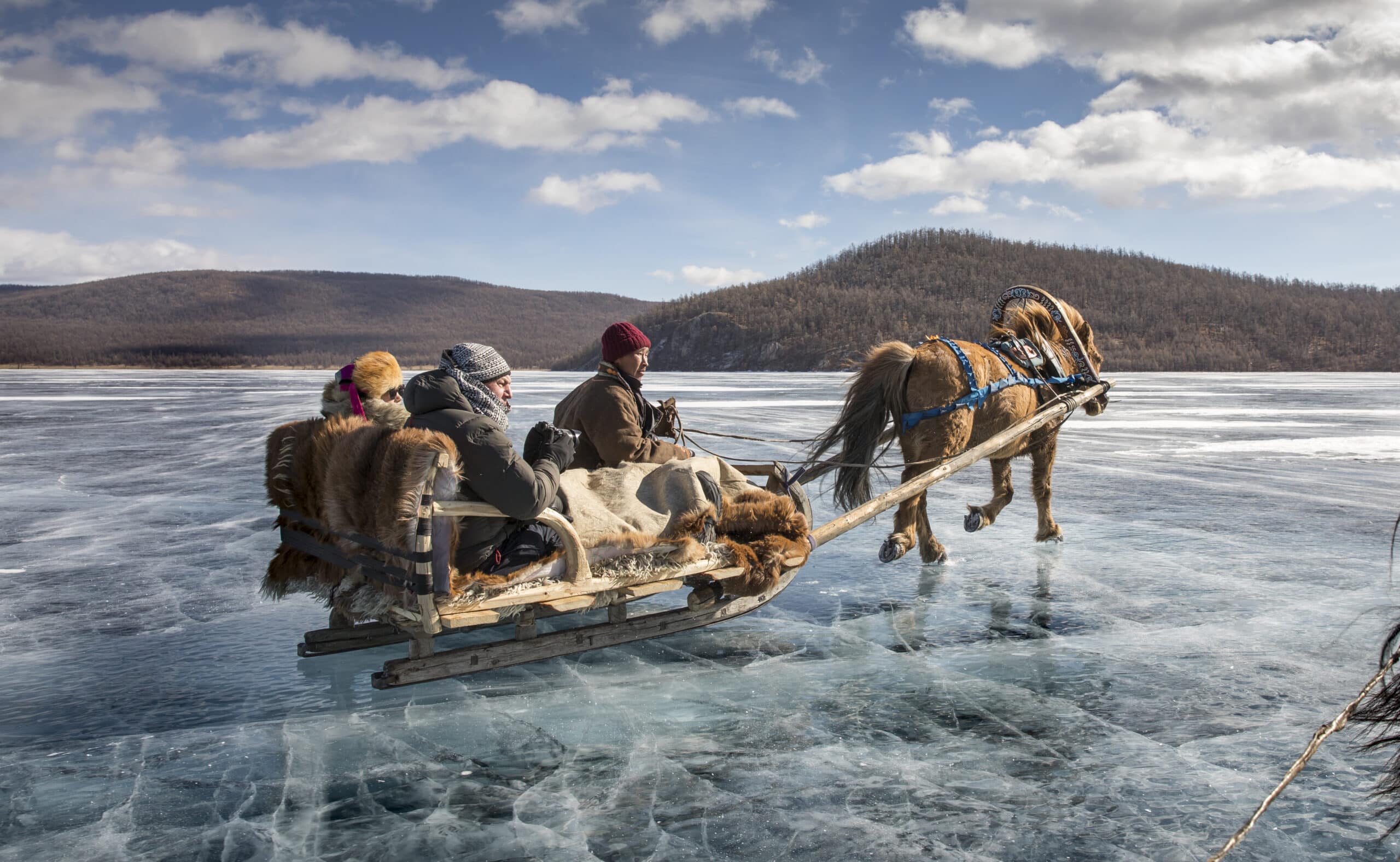
The annual Blue Pearl Ice Festival held on Khuvsgul Lake isn’t only one of Mongolia’s most popular festivals, it’s the most famous festival held in winter. While some tourists do attend, this is mostly a festival and celebration for locals.
The Ice Festival is every year on March 3rd and 4th while Khuvsgul Lake is frozen solid. The festival includes the chance to ride horse-drawn sleds, see elaborate ice sculptures, ice skate, watch an ice wrestling competition, and show off your strength in a giant game of tug of war. There’s also dog sledding and an ice ger building contest.
The Khuvsgul Lake Ice Festival is one of Mongolia’s most unique festivals to experience. Not many tourists make the trek to experience this annual tradition on Khuvsgul Lake in the middle of winter, and they’re missing out.
CLICK HERE: Experience Khuvsgul Lake & meet the Reindeer Herders during this tour →

Side Quest to the Reindeer Festival in Tsagaannuur
A day or two before the Ice Festival begins, there’s another celebration that’s even more off the beaten path: the Winter Reindeer Festival. It’s held in Tsagaannuur, a small village in the far north of Khuvsgul Province near the edge of the taiga, and it’s hosted by the Dukha (Tsaatan) people one of the last reindeer-herding communities in the world.
For most of the year, the Dukha live deep in the taiga forest, moving their camps with their reindeer herds. The festival is one of the few times they gather in one place to share their way of life with visitors. You can watch reindeer races across the snow, take a reindeer sled ride, see Dukha families in traditional dress, and witness shamanic ceremonies that are central to their culture. Local artisans also sell handmade crafts carved from reindeer antler and wood, which make far more meaningful souvenirs than anything you’ll find in Ulaanbaatar.
So why go? Reaching the Dukha’s camps in the taiga usually means days of travel by horseback, so the festival is by far the most accessible way to meet the reindeer herders and see their culture firsthand. It’s also small and intimate. You won’t be competing with crowds, and it feels like a community gathering rather than a staged show. And because it happens just before the Ice Festival, you can easily combine the two: spend a day with the reindeer herders, then drive across the frozen lake to Khatgal in time for the Blue Pearl Ice Festival. If you’re making the long trip to northern Mongolia in winter anyway, it would be a shame to miss it.
CLICK HERE: Private 10-day Northern Mongolia tour →


Immerse Longer with Mongolia's Reindeer Tribe
If one day at the festival leaves you wanting more, consider staying longer. Add a few days to your trip to visit a Dukha (Tsaatan) reindeer family in the taiga and see their way of life up close by living it alongside them. You’ve already come this far, after all.
During a homestay, you’ll sleep in an ortz, the traditional tipi-style tent the Dukha use as they move between camps. You’ll drink reindeer milk and tea made from melted snow, help with daily chores, and ride reindeer through one of the most remote corners of Mongolia. Fewer than 50 families still live this way, which makes this one of the rarest travel experiences anywhere in the world.
Why visit in winter? I think it’s the best time of year to visit the Dukha, because it’s when the reindeer are truly in their element. They’re built for the cold, and they move easily through deep snow and rough terrain that would stop most other animals. Watching them carry riders through the frozen taiga is something you won’t forget.
CLICK HERE: Consider this Khuvsgul Lake & Reindeer Taiga Adventure →


Visit the Living Waters of Jargant River
The Jargant River is famous for never freezing, even when temperatures drop to −50°C. It’s one of the most peaceful and beautiful places to visit in Mongolia in winter.
The river is a short distance from Renchinlkhumbe Soum. Try to arrive around sunset, when the light is at its best, and take a few minutes to soak in the scenery. Steam rising off open water surrounded by snow and frost makes it feel more like a fairytale than a remote corner of northern Mongolia.
CLICK HERE: Stay at Jargant Lodge when you go →
Khoridol Saridag Mountains
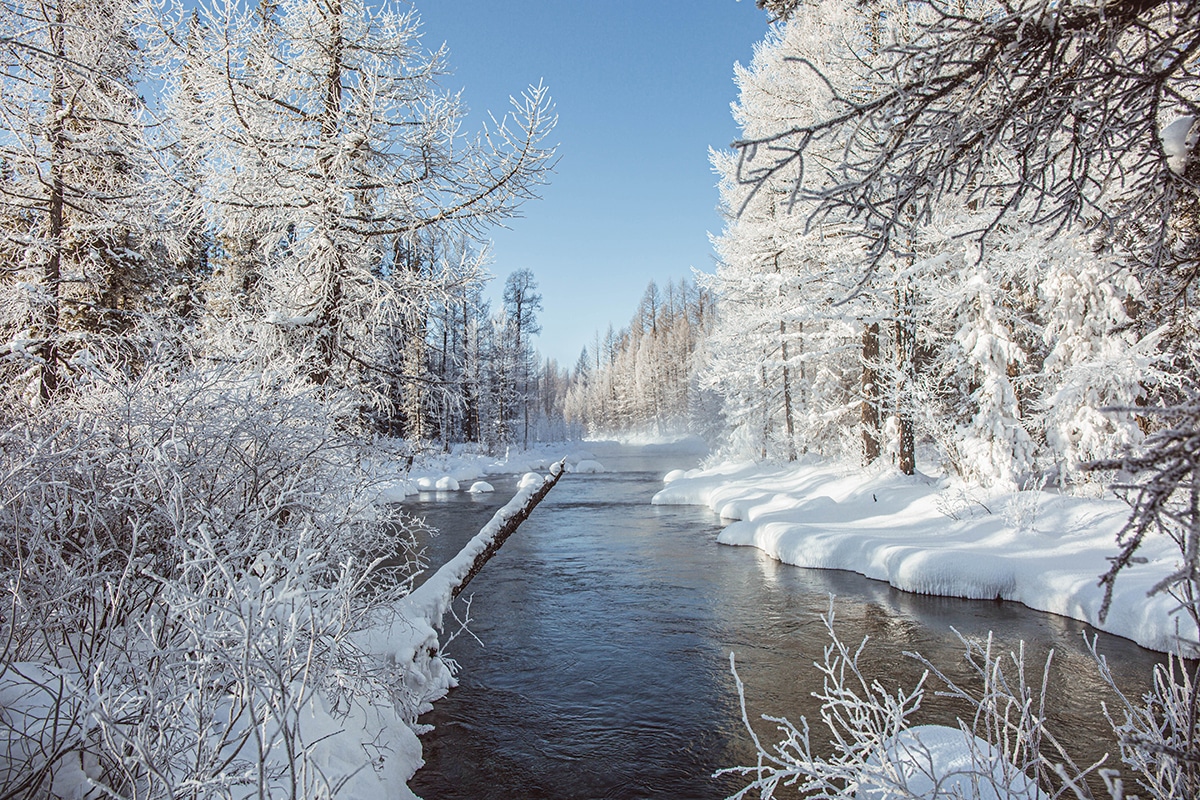
Rising along the western shore of Khuvsgul Lake, the Khoridol Saridag Mountains are one of the most dramatic landscapes in northern Mongolia. The range stretches about 150 kilometers between the lake and the Darkhad Valley, and its highest peaks top 3,000 meters. Since 1997, it has been a Strictly Protected Area, Mongolia’s highest level of protection. That status has kept much of it wild and largely untouched.
Most travelers only see these mountains in summer, when they come to trek and ride horses. Winter transforms them completely. Snow blankets the rugged peaks, frost coats the larch forests, and the valleys go quiet in a way they never do during the busy summer months. Wildlife thrives here too. The range is home to elk, red deer, ibex, wolves, and even snow leopards, and fresh tracks in the snow are a reminder of how much lives in these mountains even when you can’t see it.
Winter is also when the area comes alive with tradition. The Darkhad herders move their livestock through these mountains to their winter camps near the lake, and the main route from Khuvsgul Lake to Renchinlkhumbe and the Darkhad Valley crosses the range. If you’re heading north to the Winter Reindeer Festival or the Jargant River, you’ll pass right through it. Plan a few extra hours for the drive, stop often for photos, and take in some of the most beautiful winter scenery in Mongolia.
Hunt with Eagles in Western Mongolia
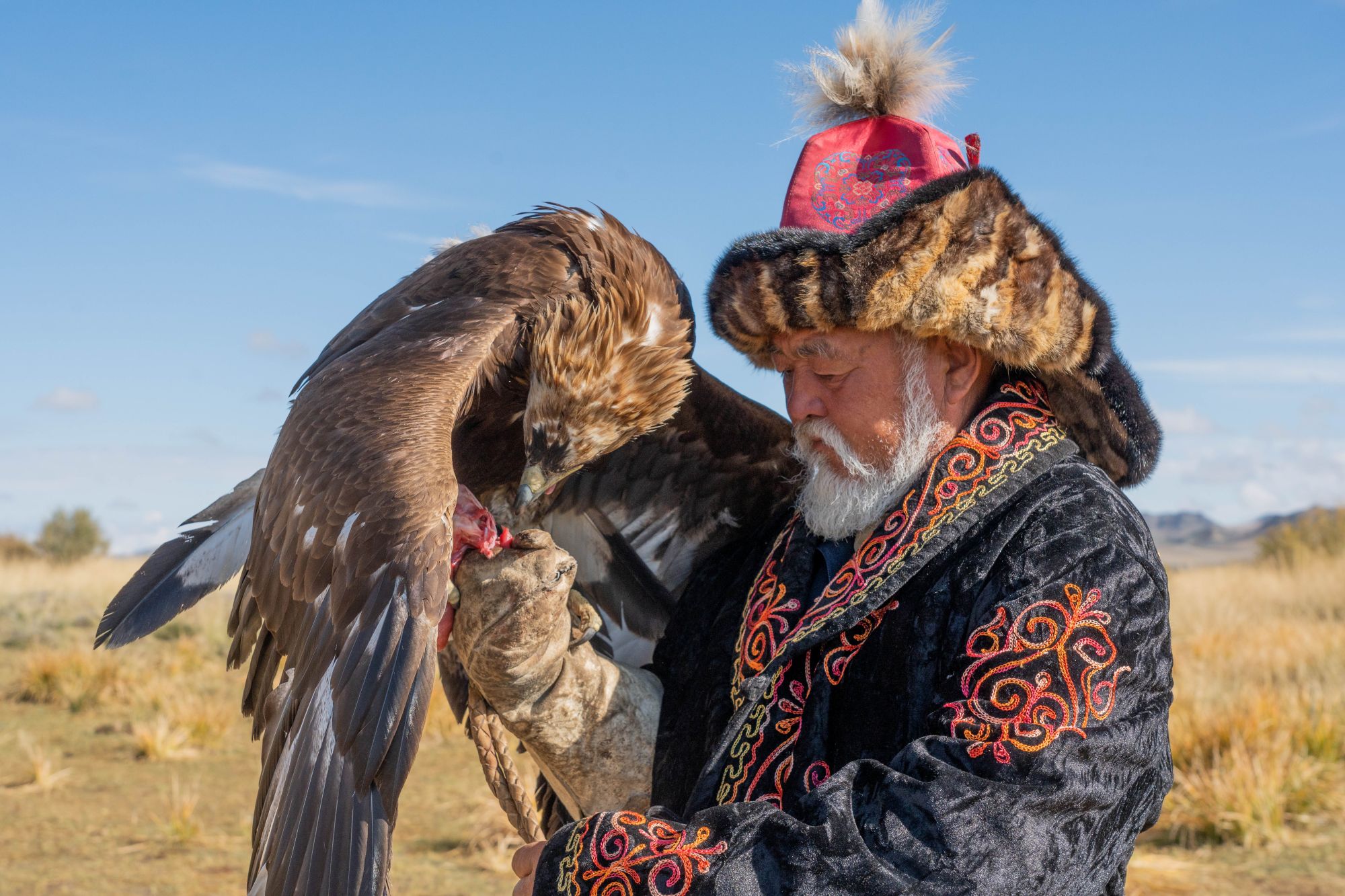
Ulgii’s main eagle festival, the Golden Eagle Festival, is held every year on the first weekend of October. It’s one of the most popular festivals for tourists in Mongolia, drawing more than 2,000 visitors each year who come to watch the hunters and their eagles in action.
The festival is a great introduction, but don’t let it be the end of your trip. Plan to spend a few extra days living with an eagle hunter and his family. It’s the best way to understand this ancient tradition, and a rare chance to experience a culture that is quickly disappearing.
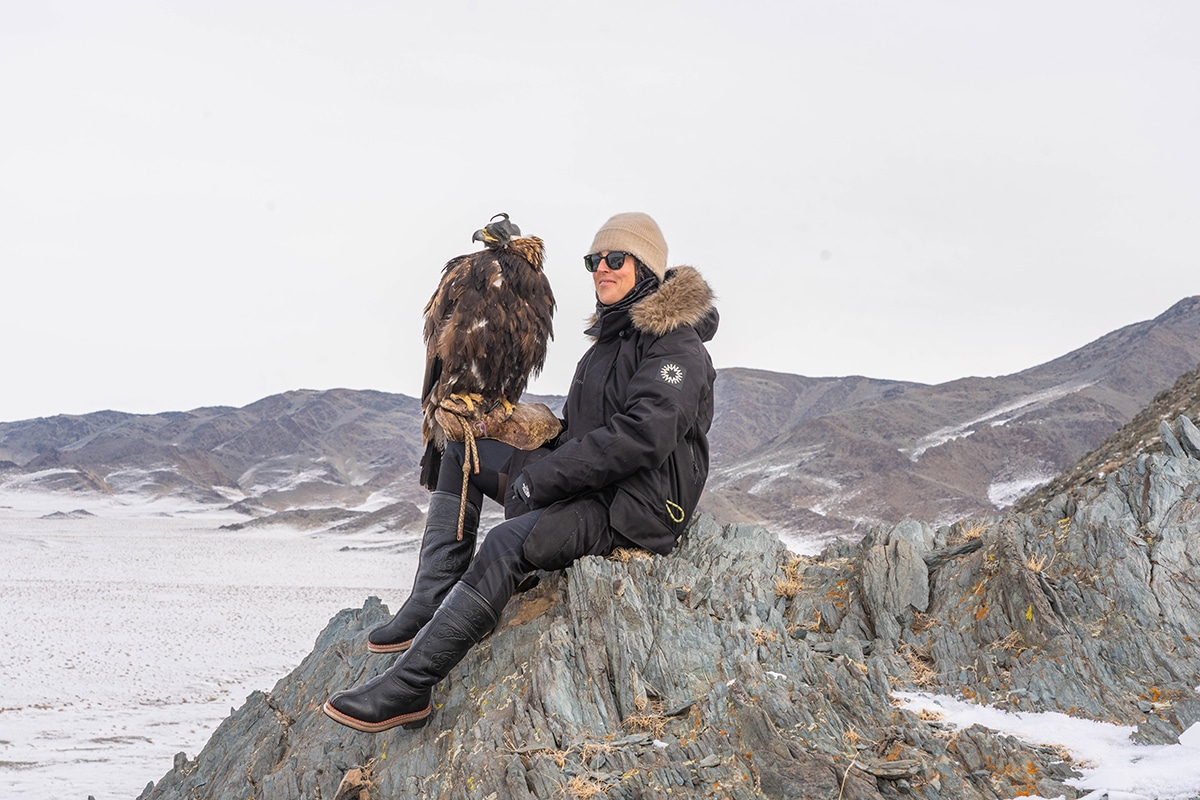
During your stay, you’ll ride horses alongside the hunters as they carry their eagles on their arms, using a wooden crutch for support, and head into the mountains to hunt. Watch closely as the hunter slowly removes the hood from his eagle’s eyes, giving it the chance to spot a fox or rabbit in the distance. Then the eagle launches, diving toward its prey at incredible speed. Seeing that kind of power up close is unlike anything else you’ll experience.
When should you go? Eagle hunting season runs from September to March, and it’s the only time of year you can see a real hunt. This is when the eagles’ feathers are at their fullest and the animals they hunt have their thickest winter coats.
If you’d like to meet the eagle hunters yourself, I also run a small group trip every September to live with an eagle hunter family and attend a local festival →
CLICK HERE: Choose your dates and live among the nomadic Eagle Hunters →

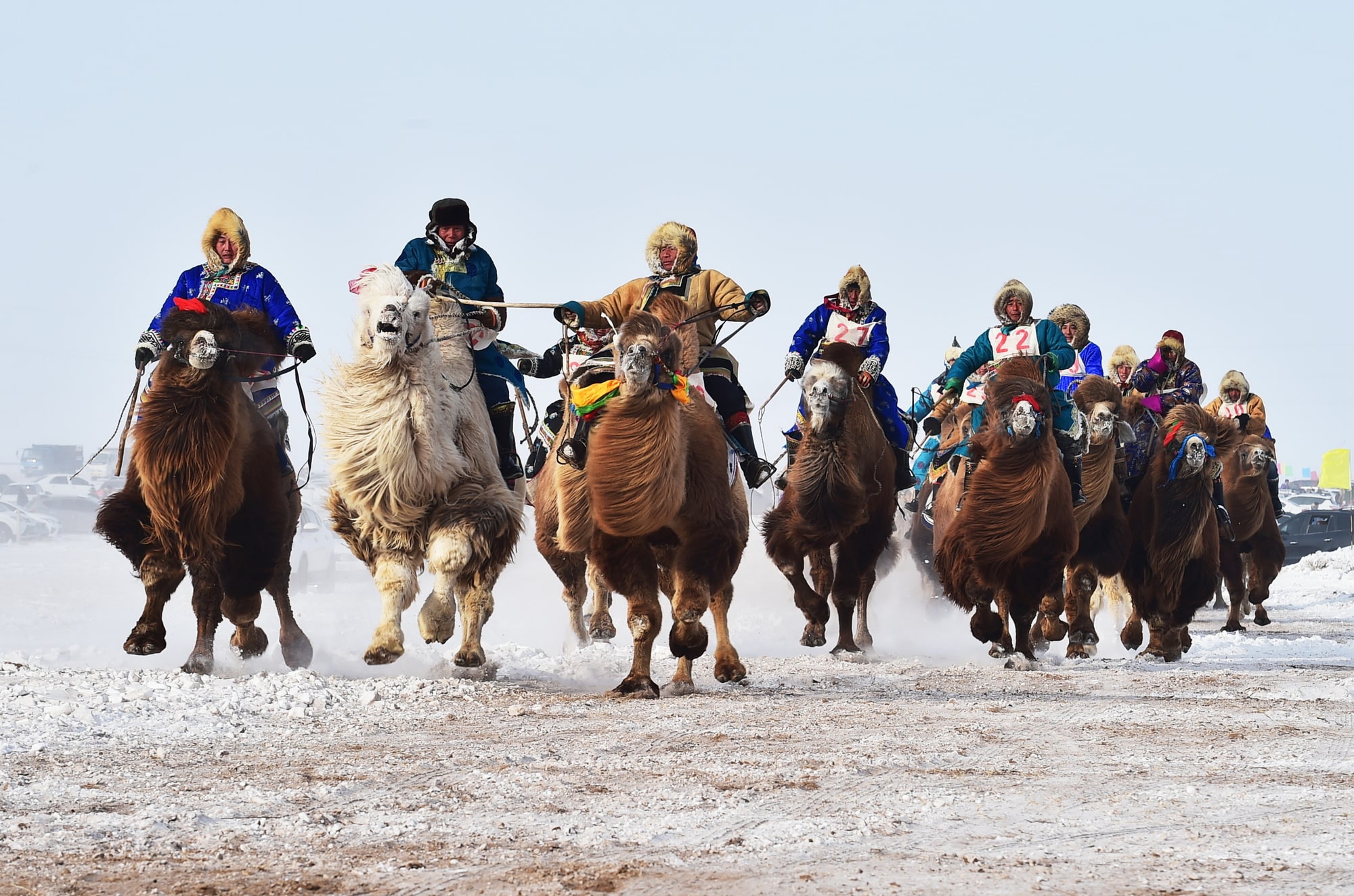
Attend the Annual Thousand Camel Festival
Mongolia’s answer to the camel festivals of the Middle East, the Thousand Camel Festival is rooted in the traditions of the Gobi’s camel herders. It’s a rare chance for travelers to meet the herders and learn about a way of life built around one of the hardiest animals on earth.
Highlights of the festival include:
- Camel polo
- Camel races
- A camel parade with more than 100 camels
- The chance to taste camel dairy products
The festival is held every year in early February in Bulgan soum, in the South Gobi Province. There are no flights from Ulaanbaatar in February, so getting there means a 10-hour drive. The upside is that some of the Gobi’s best-known sights are within reach, including the Flaming Cliffs, Yolyn Am Valley and its ice field, and the Khongor Dunes. Adding them to your trip makes it easy to build a full winter itinerary in the Gobi.
Snow-Covered Sand Dunes in the Gobi
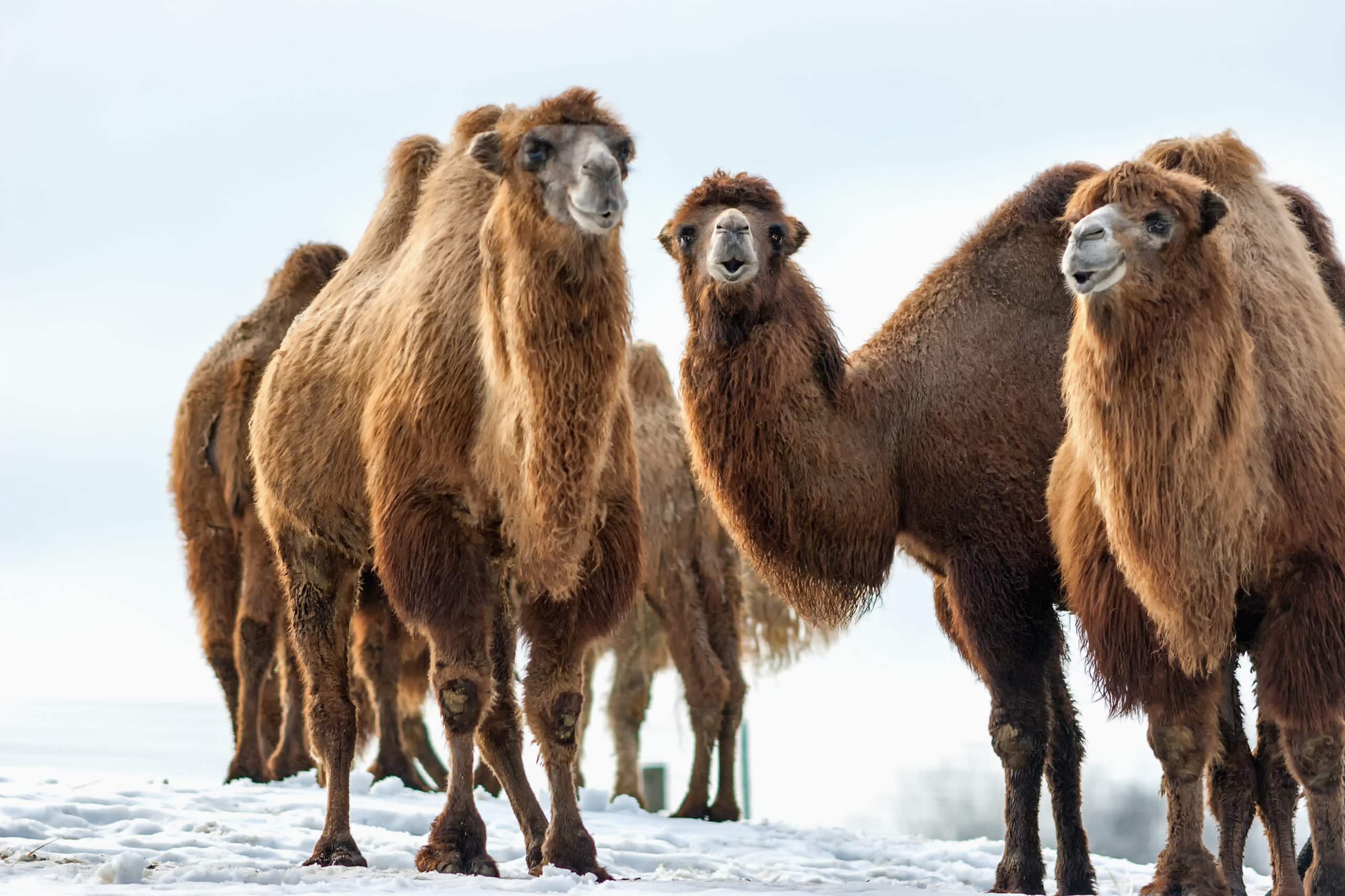
Snow on sand dunes isn’t something you see every day. Well, unless you’re from the Gobi Desert.
The Gobi is one of the coldest deserts in the world, and in winter, temperatures regularly drop well below −20°C at night. When snow falls, it settles across the dunes in a thin white layer, creating a landscape that looks almost unreal. Golden and orange sand peeks through the snow along the ridgelines, and the curves of the dunes stand out sharply against the white. It’s a strange and beautiful mix of desert and winter that few travelers ever get to see.
The best place to experience it is Khongor Els, also known as the Singing Dunes. These massive dunes rise as high as 300 meters and stretch for dozens of kilometers along the edge of the Gobi. In summer, the area draws crowds of tourists. In winter, you’ll likely have the dunes almost entirely to yourself. Add a herd of shaggy Bactrian camels wandering across the snow, and the scene becomes even more memorable.
Snow in the Gobi tends to be light, and wind and sun can clear it from the dunes within a day or two. For the best chance of seeing the dunes covered in white, stay flexible with your schedule and head out early in the morning after a snowfall. The low winter sun at sunrise and sunset casts long shadows across the dunes and brings out the contrast between the sand and snow.
Photographers and drone pilots will especially love this landscape. Just come prepared for the cold. Camera and drone batteries drain quickly in freezing temperatures, so bring extras and keep them warm in an inside pocket until you need them.
CLICK HERE: Private Gobi Desert winter tour →
Eat Buuz on Tsagaan Sar
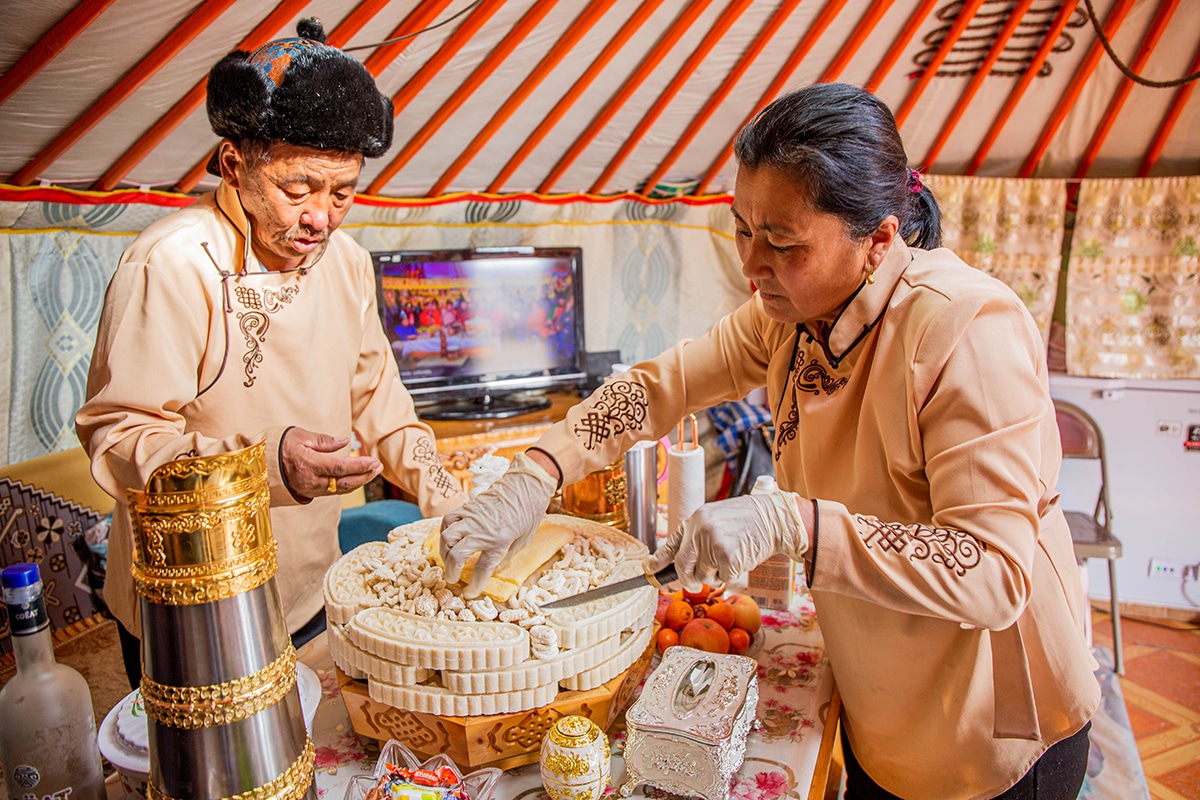
Tsagaan Sar, the Mongolian Lunar New Year, is one of the biggest holidays in Mongolia. Its name translates to “White Moon” (or “White Month”), and it celebrates the end of winter and the coming of spring. The holiday falls on the first day of the lunar new year, usually in late January or February, and it’s tied to peace, harmony, and fresh starts. Tsagaan Sar is a national public holiday, and it’s one of the most interesting times to be in Mongolia, especially if you’re visiting in winter.
The celebration begins the day before the new year, on Bituun. Families spend the day cleaning their homes, settling old debts, and preparing for the holiday. That evening, they gather for a big meal to see out the old year.
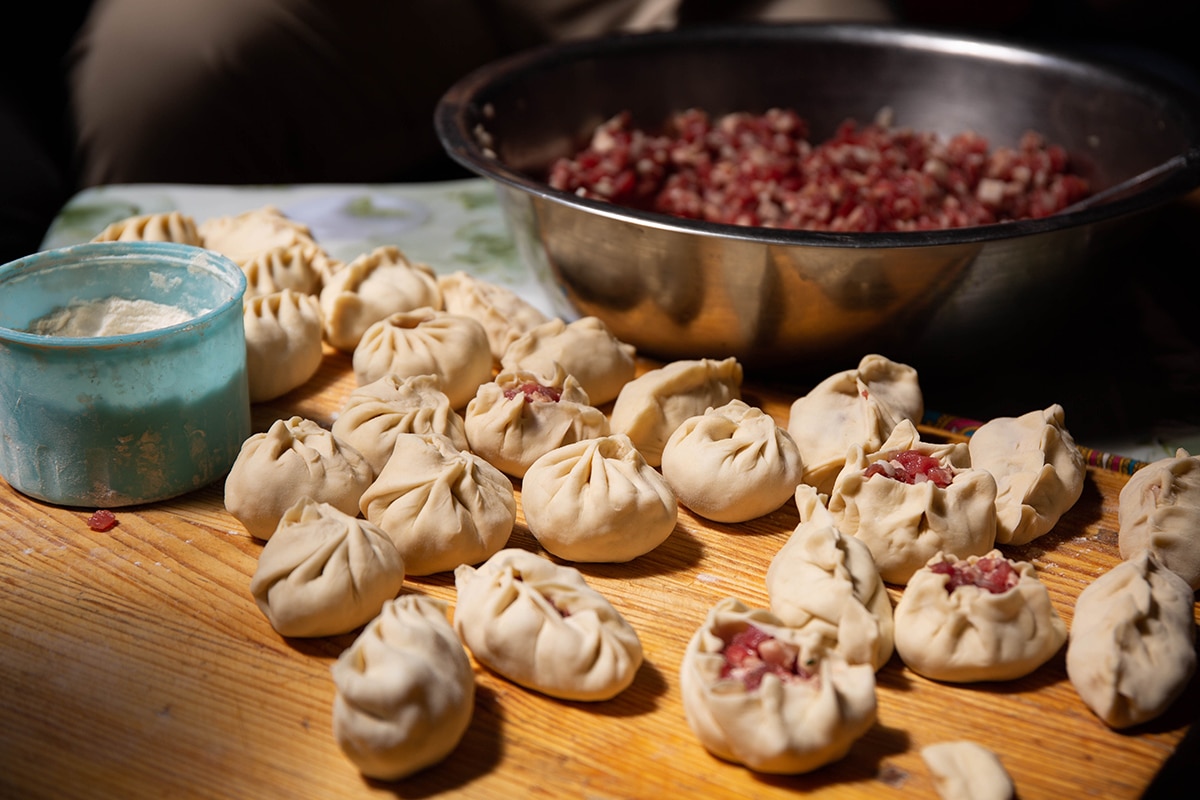
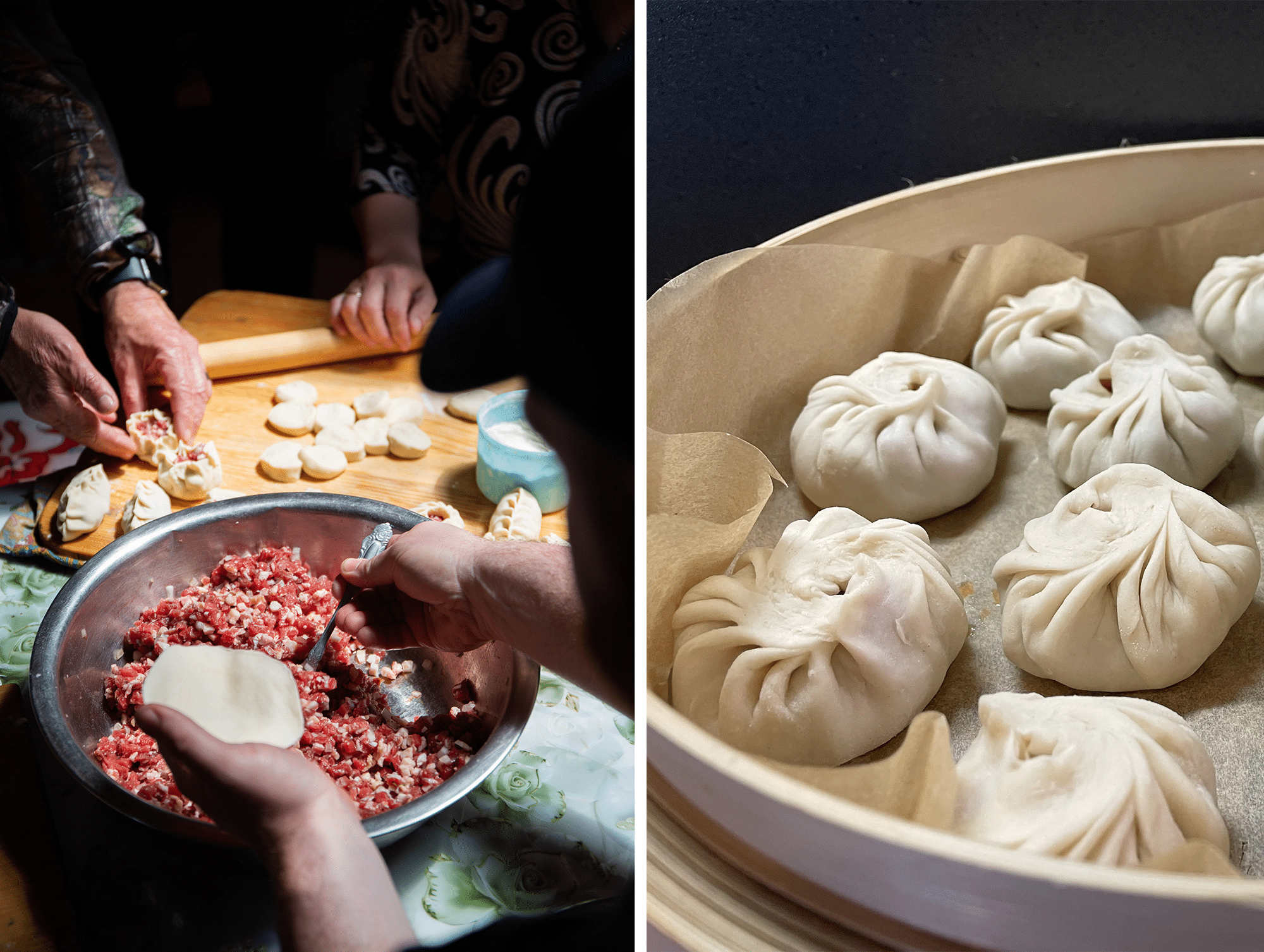
On Tsagaan Sar itself, families gather at the home of their oldest relative. When they arrive, they greet the eldest members of the family first with a traditional greeting called zolgokh, in which the younger person supports the elder’s arms from below as a sign of respect. Everyone then sits down to eat together. Tables are piled high with steamed mutton, a whole sheep’s back and tail, rice with curds, stacked pastries called ul boov, and mountains of buuz, the steamed dumplings that families often spend days making ahead of time. Gifts are exchanged too, making Tsagaan Sar the Mongolian equivalent of Christmas and New Year’s rolled into one big, happy, buuz-filled celebration.
The best way to experience Tsagaan Sar is with a Mongolian family. If you can convince a friend to let you join their celebration, or find a tour that includes a family visit, you’ll get the real White Moon experience.
CLICK HERE: Fill out this Private Tour form if you’d like to experience Tsagaan Sar →
Watch a Mongolian Bokh Wrestling Tournament at the Wrestling Palace
Wrestling, or bökh, is Mongolia’s national sport, and one of its biggest tournaments of the year happens during Tsagaan Sar. Along with Naadam in July, the Lunar New Year tournament is one of the two most important wrestling events on the calendar. For travelers visiting in winter, it’s the best chance to see Mongolian wrestling live.
The tournament is held at the Wrestling Palace (Bökhiin Örgöö), a ger-shaped arena on the east end of Peace Avenue in central Ulaanbaatar. The arena seats about 2,500 spectators. Most years, 256 of the country’s top wrestlers compete, all holding state or provincial titles. The tournament has been running for more than six decades, and winning it is one of the highest honors in the sport.
Mongolian wrestling looks very different from wrestling in the West. There are no weight classes and no time limits. A wrestler loses when any part of his body other than the soles of his feet or his hands touches the ground, so a match can end in seconds or stretch on for a long time between evenly matched opponents. The wrestlers wear a traditional outfit of a short, open-chested jacket called a jodag, tight briefs called shuudag, and leather boots. Before and after each match, they perform the eagle dance, spreading their arms like wings in a ritual that dates back centuries.
The crowd is half the experience. Fans pack the arena, cheering for their favorite wrestlers and cheering even louder in the final rounds as the field narrows down to the champion. Because the tournament falls during the holiday, the mood is festive, with many locals dressed in their finest deels.
Tickets go fast, especially for the later rounds, so buy them as early as you can or book through a local tour operator. The tournament dates follow the lunar calendar and change every year, so check the schedule before you plan your trip.
CLICK HERE: Get tickets to the Lunar New Year Mongolian Bokh Wrestling Tournament →

Stay With a Nomadic Family in Winter
Most travelers who stay with a nomadic family in Mongolia do it in summer, when the grass is green and the herders are spread out across the open steppe. A winter homestay is a completely different experience, and in many ways a more authentic one. It’s the season when you see how resilient nomadic life really is, and how families have adapted to survive some of the harshest conditions on earth.
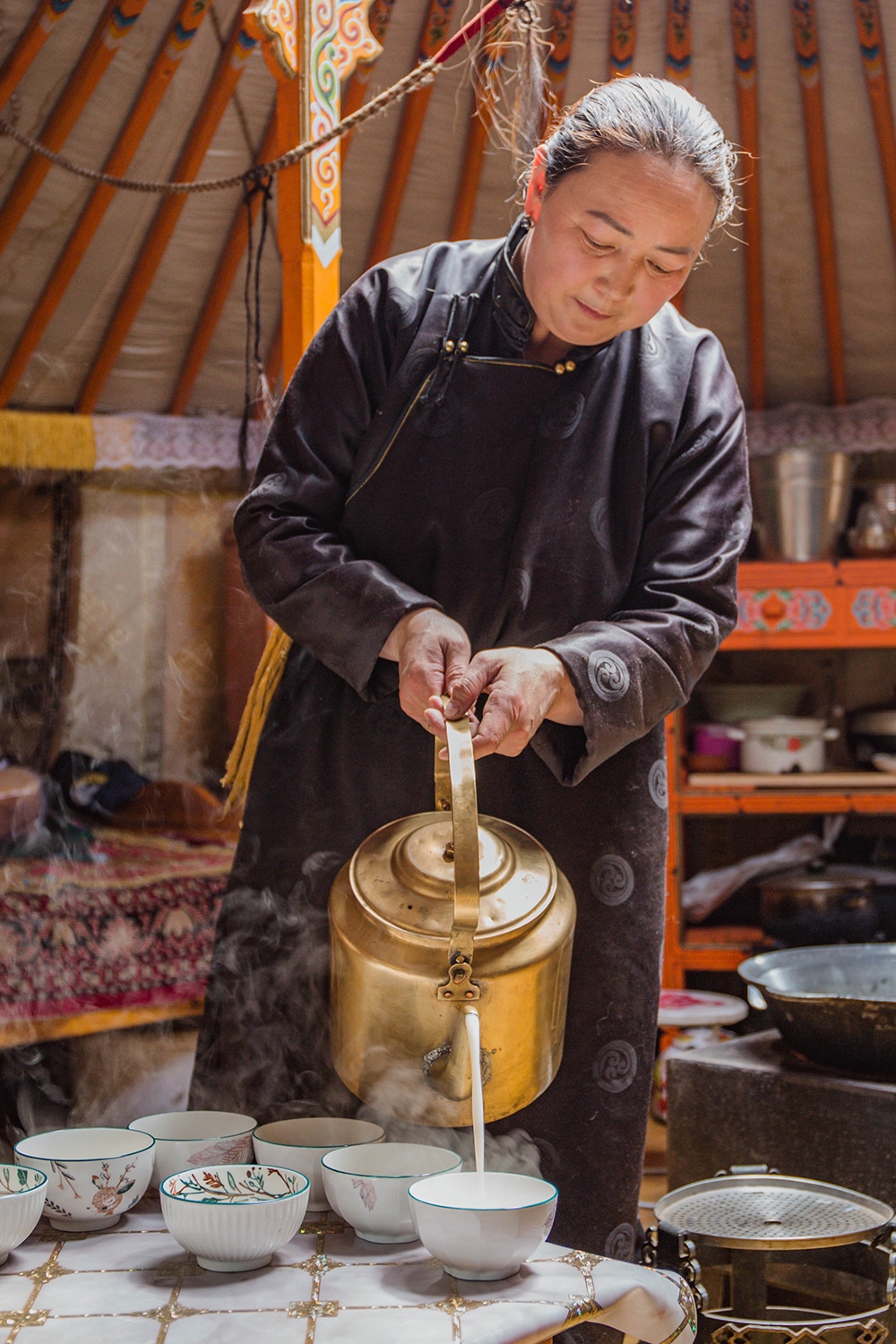
In winter, herding families move to their winter camps, usually tucked into a sheltered valley or the south-facing side of a hill where they’re protected from the wind. Their gers are wrapped in extra layers of felt, and a small stove in the center burns day and night to keep the cold out. Stepping inside from −30°C into a warm ger, with a pot of milk tea already on the stove, is one of the coziest feelings you’ll ever have.
Days at a winter camp revolve around keeping the animals safe and the family warm. You can help herd the sheep, goats, and horses out to graze and bring them back to their shelters before dark, collect dried dung and firewood for the stove, and chop blocks of ice from a frozen river to melt for water. In the evenings, everyone gathers inside the ger to eat, talk, and play games like shagai, a traditional game played with sheep ankle bones.
Food is simple, hearty, and made to fuel you through the cold. Expect plenty of mutton, salty milk tea (suutei tsai), and homemade dairy like dried curds and clotted cream. If your visit falls close to Tsagaan Sar, you may even get to help the family fold and pinch hundreds of buuz in preparation for the holiday.
What makes a winter homestay so special is the hospitality. Nomadic families have a long tradition of welcoming travelers into their homes, and in winter, when visitors are rare, that welcome feels even warmer. You’ll leave with a real understanding of how nomadic families live, and memories that no hotel stay could ever give you.
CLICK HERE: Spend 2-days with a Local Nomadic Family in the heart of winter →
Soak in Mongolia’s Hot Springs
Yes, Mongolia has hot springs, and there’s nothing quite like sinking into steaming water while the air around you is well below freezing.
The two most popular options are Tsenkher and Khujirt, both in central Mongolia’s Arkhangai and Övörkhangai provinces. Each has several resorts and ger camps built around the springs. Tsenkher is the better pick if you’re traveling with kids or in a large group, while Khujirt is quieter and more focused on wellness and relaxation.
The geothermal water at both is rich in minerals, and a 20- to 30-minute soak after a long, cold day might just change how you feel about Mongolian winter.
It’s worth going in with realistic expectations, though. These aren’t the polished hot spring resorts you’d find in Japan or Iceland. Most facilities are simple: a few outdoor pools, wooden bathhouses, and gers or basic lodges to sleep in. Both springs are also a long drive from Ulaanbaatar, often a full day on winter roads, so plan for at least two or three nights to make the trip worthwhile. And while getting into the water is the easy part, getting out into −25°C air is another story. Keep your towel and warm clothes close by.
Not every camp stays open through winter, so confirm before you book. Go in knowing what to expect, and a winter soak in the Mongolian countryside can be one of the most memorable parts of your trip.
CLICK HERE: Book this Central Mongolia: Tsenkher Hot Springs 3-Day Guided Tour →
Indoor Mounted Archery Training in Ulaanbaatar
Winter doesn’t mean the end of Mongolian mounted archery. It just means the training moves indoors.
Mounted archery is one of the skills that made the Mongol Empire possible. Mongol warriors could ride at full gallop and shoot accurately in any direction, a skill that gave them a huge advantage over the armies they faced. Today, a growing community in Mongolia is keeping that tradition alive. In summer, they train and compete out on the open steppe. When the temperatures drop, the riding takes a break, but the archery doesn’t.
Over the winter, my mounted archery friends and I train at an indoor center in Ulaanbaatar. This is where we sharpen the shooting technique that makes or breaks you on horseback. We work on drawing, aiming, and releasing quickly, smoothly, and consistently, so that it becomes second nature by the time we’re back in the saddle in spring.
You’re welcome to join us. No experience is needed. You’ll learn how to handle a traditional bow, how to draw and release, and how to put arrows on target, all with guidance from experienced archers. It’s a fun, hands-on way to connect with one of Mongolia’s most legendary traditions, and a great way to spend a cold afternoon in the city. You might even end up shooting alongside me!
CLICK HERE: Indoor archery training in Ulaanbaatar →
Slow Down at Nine Pines Lodge
After days of bumpy roads, ger camps, and long drives across the frozen steppe, sometimes the best thing you can do in Mongolia is slow down. Nine Pines Lodge is the perfect place to do it.
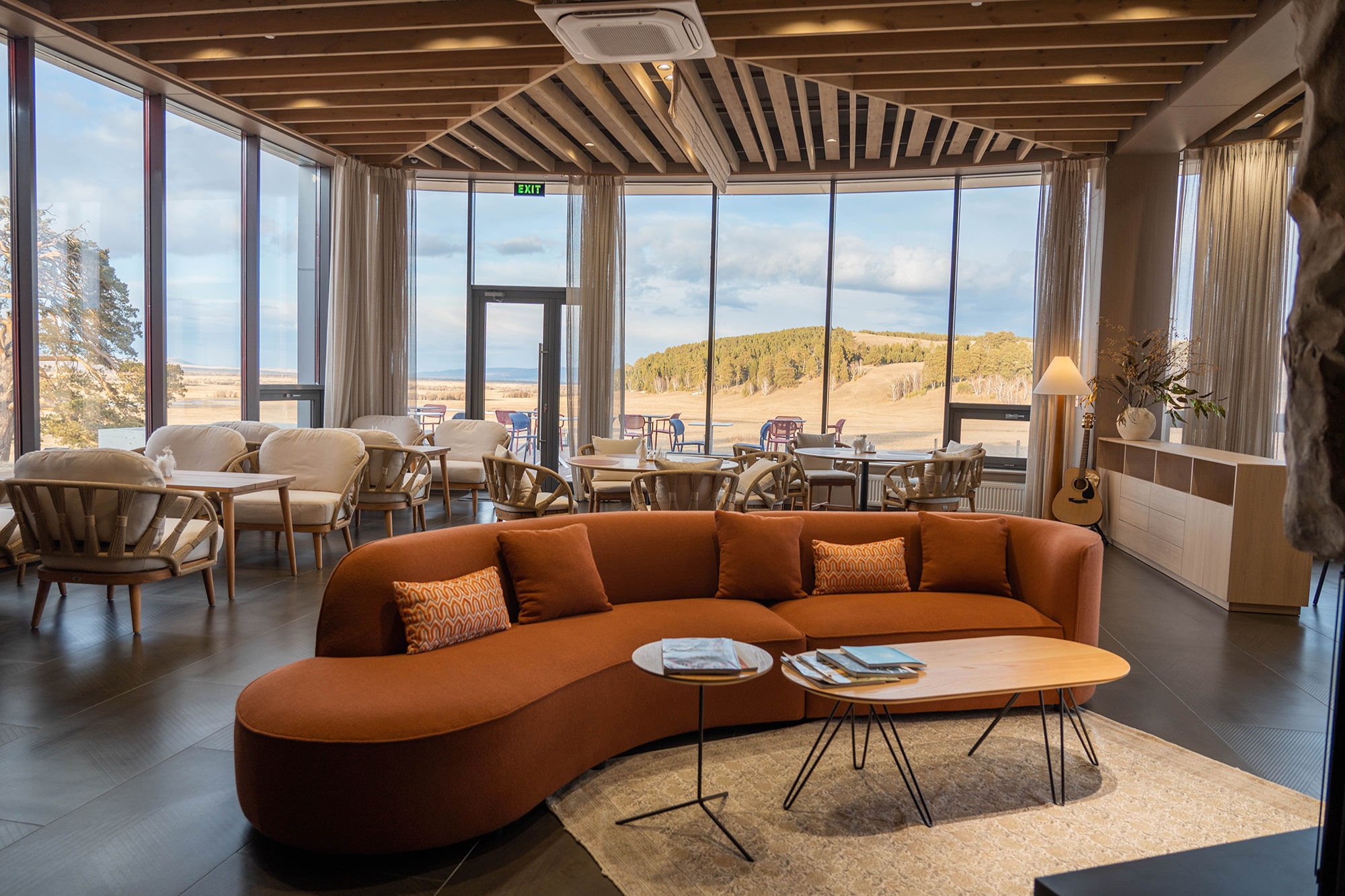
Nine Pines is a new luxury eco-lodge in Dadal, a remote corner of Khentii Province in northeastern Mongolia. This is the land where Chinggis Khaan was born, a landscape of pine forests, rolling hills, and winding rivers that feels worlds away from Ulaanbaatar. The lodge’s name is rooted in local tradition. In Mongolian culture, the number nine stands for strength and eternity, and the pine tree represents resilience through even the harshest winters.
Winter is when Nine Pines really shines. The forests around the lodge are blanketed in snow, the summer crowds are long gone, and the whole valley goes quiet. It’s the kind of stillness that’s hard to find anywhere else. Spend your days exploring the snowy countryside and the history of the area, then come back to warm up in the sauna and settle in for a long dinner at the lodge’s restaurant.
For a winter stay, book a room in the main lodge. Its guestrooms are built for all four seasons, with warm natural textures and the scent of pine, and they’re the coziest place to wait out a cold Mongolian night. Most of the lodge’s domes are seasonal, so the main lodge is the way to go when temperatures drop.
With only 20 rooms and domes spread out for privacy, Nine Pines never feels crowded. If you’re looking for a place to rest, recharge, and enjoy Mongolia’s winter at a slower pace, this is it.
CLICK HERE: Book Nine Pines Lodge →

Visit the Mongol Nomadic Culture Park in Winter
If you only have a day to spare in Ulaanbaatar, the Mongol Nomadic center is one of the easiest ways to experience traditional nomadic life without a long drive into the countryside. Located about an hour from the city, it has been introducing visitors to Mongolian nomadic culture since 2011, and it stays open through winter.
The center brings many parts of nomadic life together in one place. You’ll meet the five animals that Mongolian herders have depended on for centuries: horses, camels, cattle, sheep, and goats. You’ll also learn how families turn milk into the dairy products that keep them going through the winter. One of the highlights is helping put up a ger alongside locals. Seeing how quickly these homes go up, and how warm they stay inside, explains a lot about how nomads have survived Mongolian winters for so long.
There’s time for fun, too. Try traditional games like ankle-bone shooting, take a camel ride across the snowy hills, and watch the center’s nomadic shows, which bring music and old traditions to life. Along the way, you’ll pick up the basics of ger etiquette, then warm up with a traditional Mongolian meal and a taste of milk vodka.
Booking a guided day tour is the easiest way to visit in winter. Transportation from Ulaanbaatar is included, and your guide will explain the meaning behind each tradition, so you get more out of the experience than you would on your own. It’s a great introduction to nomadic culture before heading deeper into the countryside, or an easy way to experience it if your time in Mongolia is short.
CLICK HERE: Embark on the Winter Nomads: Welcome to Mongolia 1-day tour →
Spot Wild Horses in Hustai National Park
Hustai National Park is famous for one animal in particular: the takhi, also known as Przewalski’s horse. It’s the only truly wild horse left in the world. Takhi went extinct in the wild in the 1960s and survived only in zoos until 1992, when the first small group was released in Hustai. Today, around 450 takhi roam the park, the largest herd anywhere in the world.
Most travelers visit Hustai in summer, but I think winter is the best time to go. With no other tourists around, the park is quiet, and the animals are much easier to spot. In winter, they come down from the hills in search of food and shelter, often grazing close to the roads. The snow also works in your favor. Fresh tracks show you which animals have passed through, and following them can lead you right to a herd.
The takhi are the main attraction, and seeing a herd of stocky, dun-colored wild horses against a backdrop of snow is unforgettable. But they’re far from the only wildlife in the park. Keep an eye out for:
- Red deer, which often graze alongside the takhi on the slopes
- Mongolian gazelles, which sometimes move across the steppe in large herds
- Argali, the world’s largest wild sheep, and roe deer
- Wolves and red and corsac foxes, whose tracks are often easier to find than the animals themselves
- Pallas’s cats, small, fluffy wild cats that are rare and hard to spot but do live in the park
- Cinereous vultures and other birds of prey circling overhead
One animal you won’t see in winter is the marmot. These summer favorites spend the cold months hibernating underground.
For the best chance of spotting wildlife, go early in the morning or late in the afternoon, when the takhi tend to come down to the river to drink. Hustai is only about two hours from Ulaanbaatar, so it’s an easy day trip, though staying overnight gives you both the morning and evening wildlife windows.
CLICK HERE: Day tour to Khustai National Park from Ulaanbaatar →


Walk Through Ulaanbaatar, the World's Coldest Capital
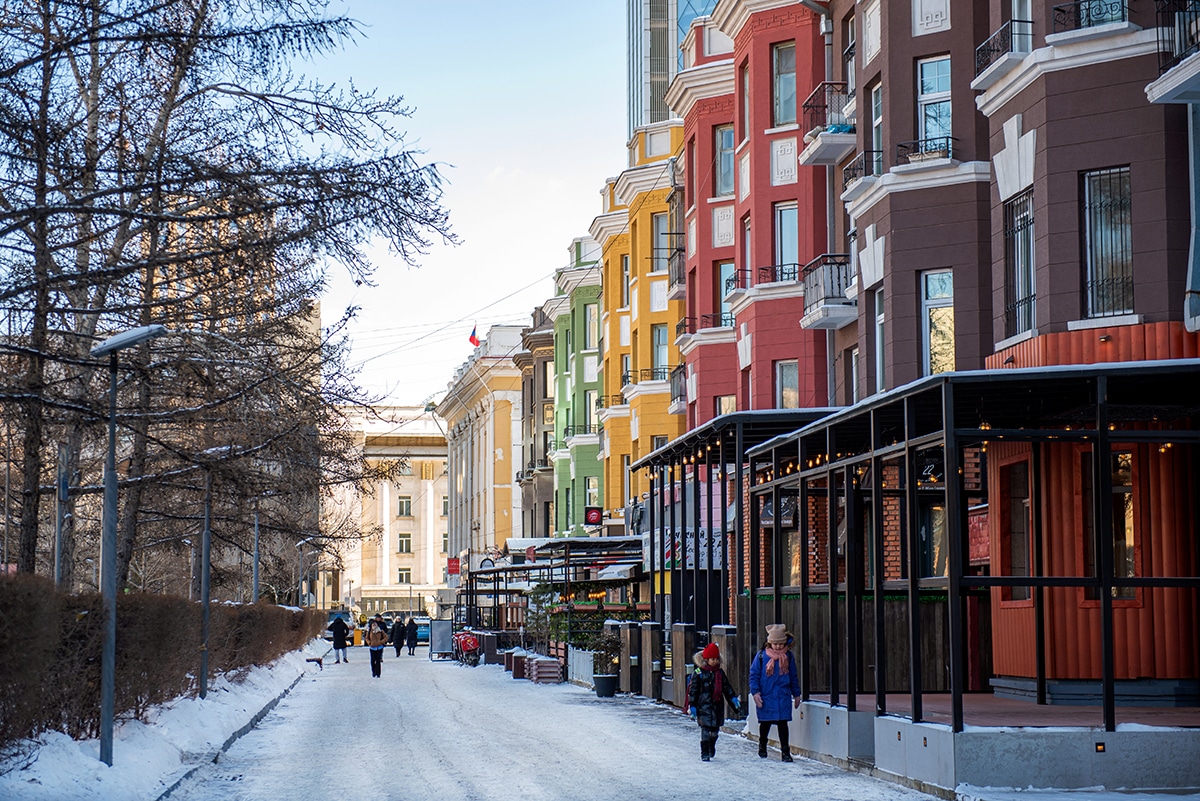
Ulaanbaatar holds the title of the world’s coldest capital, with January temperatures averaging around −20°C and often dropping much lower at night. That might sound like a reason to stay inside, but bundle up properly and the city has plenty to offer in winter. Crowds are thin, the sky is usually a bright, cloudless blue, and there’s something special about seeing the city under a coat of frost.
Sukhbaatar Square is the best place to start. The city’s main square is flanked by the Government Palace and its giant seated statue of Chinggis Khaan, and it’s an easy spot to get your bearings. From there, warm up at the Chinggis Khaan National Museum, which walks you through Mongolia’s history from the earliest nomadic empires through the rise and fall of the Mongol Empire.
Next, head to Gandan Monastery, the country’s largest and most important Buddhist monastery. Go in the morning, when monks gather to chant, and step inside the main temple to see the towering golden statue of Migjid Janraisig. Other great stops include the Winter Palace of the Bogd Khan, home to Mongolia’s last king, and the Choijin Lama Temple Museum, a small temple complex tucked between modern high-rises.
For something completely different, spend a few hours at Narantuul Market, better known as the Black Market. Despite the name, there’s nothing shady about it. It’s a massive, sprawling market that stays open through winter, and it’s one of the best places in the city to shop for winter gear. You’ll find felt boots, fur hats, wool socks, and traditional deels at far better prices than in tourist shops. Keep your valuables secure, since pickpockets work the crowds.
If you’d rather shop indoors, the State Department Store and the city’s cashmere shops are great places to pick up gifts. Mongolian cashmere is some of the best in the world, and buying it here costs far less than buying it at home.
Between stops, duck into a café for milk tea or a bowl of soup, or into a local guanz (canteen) for a plate of steaming buuz or khuushuur, deep-fried mutton pastries. Breaking up your walk with a warm meal is the best way to make it through a full day outside in the cold.
A few tips for walking around Ulaanbaatar in winter:
- Dress in layers and cover everything, especially your face, hands, and feet.
- Watch your step. Sidewalks get icy and uneven, so wear boots with good grip.
- Bring a mask. Air pollution peaks in winter, when ger districts burn coal for heat. A KN95 mask makes walking around much more comfortable.
- Plan indoor breaks every hour or so to warm up.
CLICK HERE: Coldest capital day tour →


Take the Train the Shambala & the East Gobi
One of the most memorable winter trips you can take from Ulaanbaatar doesn’t start with a long, bumpy drive. It starts with an overnight train.
The train to Sainshand, the capital of the East Gobi Province (Dornogovi), runs about 500 kilometers south along the Trans-Mongolian Railway. Trains leave Ulaanbaatar in the evening and arrive in Sainshand early the next morning, about 10 hours later. Book a sleeper berth, settle in with a book and some snacks, and wake up to the frozen Gobi rolling past your window. Nothing is sold on the train, so bring your own food. Hot water is available, so pack instant noodles, tea, or coffee.
From Sainshand, it’s about an hour’s drive south to Khamar Monastery (Khamariin Khiid), one of the most sacred sites in Mongolia. The monastery was founded in 1820 by Danzanravjaa, a famous and famously eccentric Buddhist lama, poet, and artist. It was destroyed in 1937 during the communist purges, and its temples have since been rebuilt.
Next to the monastery is the Shambhala Energy Center, a site Danzanravjaa believed was a place where our world meets the mythical realm of Shambhala. Today it’s marked by a large circle of white stupas, and visitors come from all over Mongolia to walk it, make offerings, and write down their wishes. Many people lie on the ground here to soak up the energy the site is said to give off. Nearby, you can also visit the meditation caves where monks once spent long retreats in isolation.
There’s more to explore in the area, too. Burdene Bulag, a stretch of golden sand dunes with a small oasis, looks especially striking with a dusting of snow. Pieces of petrified wood, some of them millions of years old, are scattered across the surrounding desert. Back in Sainshand, the Danzanravjaa Museum displays many of the lama’s belongings, along with artifacts saved from the monastery.
Winter is a great time to make this trip. In summer, Shambhala can get busy with visitors, especially Mongolian travelers. In winter, you’ll often have it nearly to yourself, which makes the experience feel even more peaceful and spiritual. The East Gobi is also milder than much of the country, though the wind can be fierce, so dress warmly and cover your face.
Most travelers take the evening train back to Ulaanbaatar the same day, making this an easy two-night trip with no hotels needed. For a slower pace, stay a night at a ger camp near the monastery and catch the sunrise over the Gobi before heading back.
CLICK HERE: Train tickets and tour of Shambala Energy Center →


What to Pack for a Winter Trip to Mongolia
Believe it or not, Mongolia’s winter temperatures aren’t as brutal as they sound. This is coming from a local.
The thing is, you know these temperatures are extreme, so you dress the part. You don’t leave home without gloves, a hat, scarf, and you’re wearing two pairs of pants, warm boots, and the best Mongolian cashmere or wool socks around.
When I’m in Ulaanbaatar or traveling around Mongolia in winter, I’m wearing Artic-grade gear. A Shackleton polar expedition jacket with a fur-lined hood. Sorrel winter-rated boots. North Face gloves made for below freezing temperatures. And I have a few Hot Hands hand warmers stashed in my pockets, just in case.
If you don’t feel like you’re prepared enough, you can get a winter deel, the traditional Mongolian garments local still wear, made for just this occasion. Winter deels are lined with fur and made out of naturally insulated materials such as wool or cashmere. Check out Flames Mongolia if you’re interested in having a winter deel made.
Here are a few essentials I’d be sure to pack for any trip to Mongolia in winter:


Travel Tips for Mongolia in Winter
- February and March are the best months for experiencing winter in Mongolia.
- In winter, instead of renting a car and driving yourself, hire a driver. It’s usually cheaper anyways. Read my guide on what to budget for a trip to Mongolia for more information on this.
- If you don’t have warm enough winter gear for traveling in Mongolia during these months, go to Flames Mongolia for a winter deel. It will cost you less than 600,000 Mongolian tugrik and will be the warmest thing you will ever own. I live in mine from November to March.
- Ulaanbaatar unfortunately has some of the worst air pollution in the world in the winter. Bring a KN95 disposable face mask or other mask to wear when walking around the city.
- Traffic in Ulaanbaatar gets particularly bad in the winter. Book a centrally located hotel so you can easily walk the city if you visit in December, January, February, or March. Here are some of my favorite locally-owned boutique hotels in Ulaanbaatar for your winter trip.
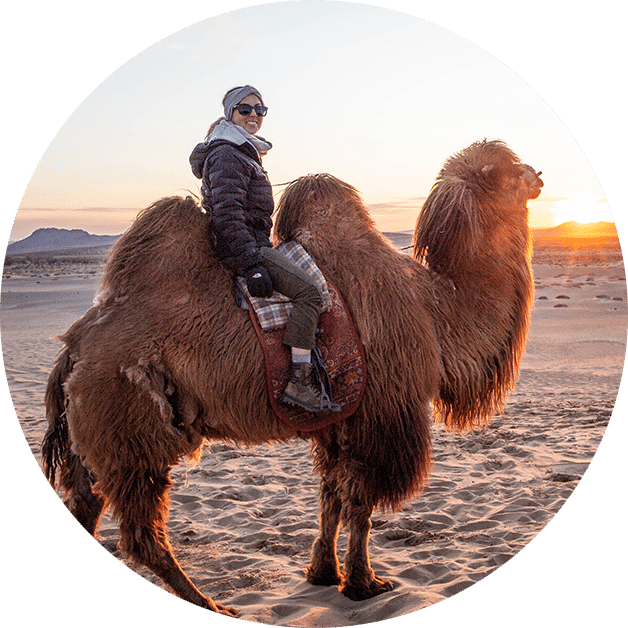
Author: Breanna Wilson
Hi! Sain uu! I’m Breanna, an American travel writer and adventurer living in Ulaanbaatar, Mongolia for more than 9 years. I’ve written for and been featured in Condé Nast Traveler, CNN, Forbes, and the New York Times, among others. Read more of my Mongolia travel articles here.

Join our Private MIM Community on Facebook
Proudly Based in Ulaanbaatar, Mongolia
© 2026 Meanwhile in Mongolia